Articolo: La Fibbia Che Ha Infranto le Regole: Una Guida Pratica alla Monk Strap
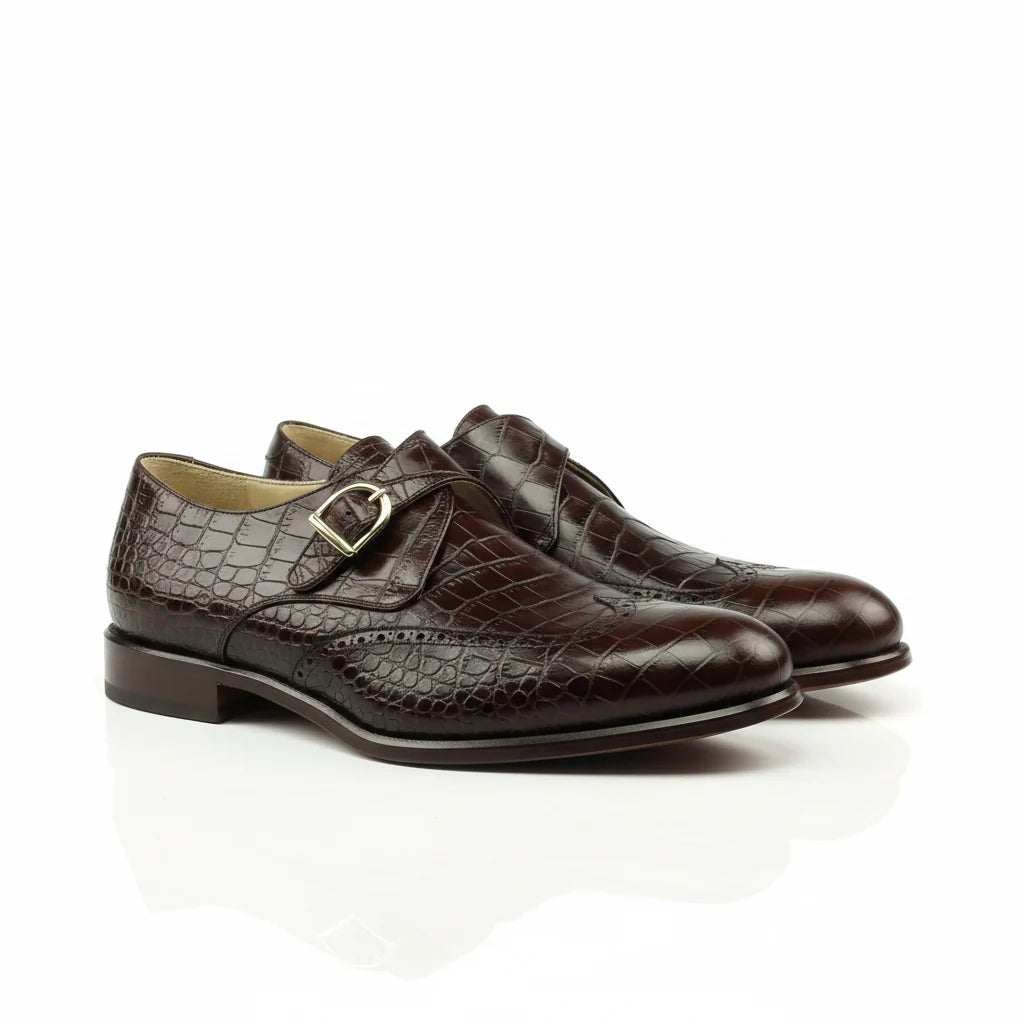
La Fibbia Che Ha Infranto le Regole: Una Guida Pratica alla Monk Strap

There is a particular kind of man who wears monk straps, and you can usually spot him before you spot the shoes. He has opinions about lapel width. He owns a watch he could sell but never would. He finds Oxfords a touch obedient and loafers a touch louche, and somewhere between those two poles he has located a shoe that fastens with a buckle and answers to no one. The monk strap is menswear's great in-between — and, for my money, its most quietly assertive silhouette.
A shoe born in a monastery, not a salon
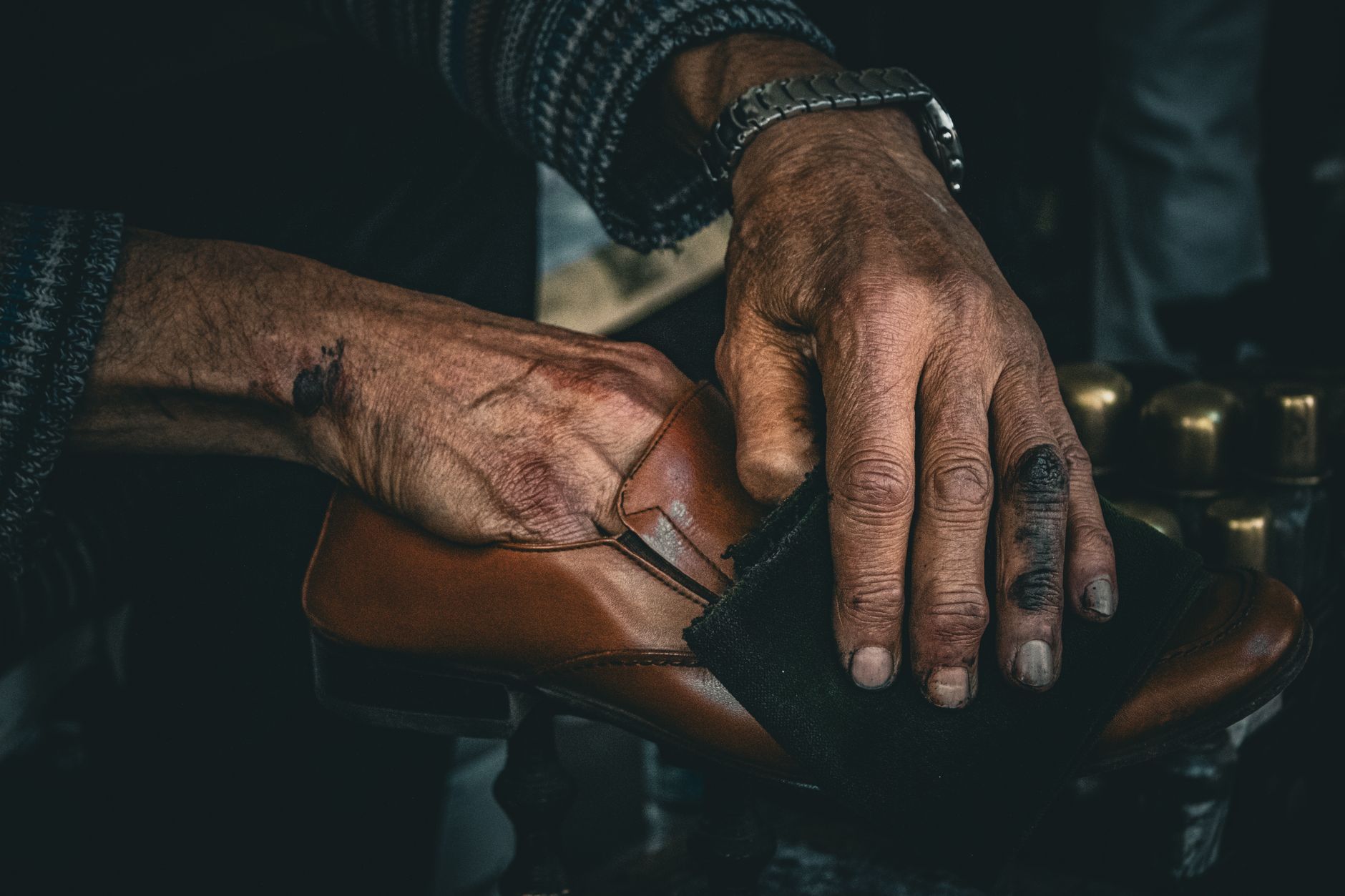
The origin story is exactly as advertised. The monk strap descends from a closed sandal worn by Alpine monks in the fifteenth century — a practical piece of workwear designed to protect the foot during long days of manual labour while remaining easy to fasten and unfasten. Where the rest of Europe was lacing, buckling, or slipping into pointed extravagance, the monastic orders wanted something that stayed shut, kept out the cold, and didn't require a squire. The buckle solved all three problems at once.
That utilitarian DNA never quite left the shoe. Even after it migrated from the cloister to the city and acquired a proper welted sole, the monk strap kept its no-nonsense character. It is the only mainstream dress shoe that closes with hardware, and that single detail — a buckle where the world expects laces — is what gives it its faint air of rebellion. It looks like a rule being gently, elegantly broken.

The Duke, the double, and the long climb to respectability
For much of the twentieth century the monk strap lived in the shadow of the Oxford. It was the shoe you wore when you wanted to signal that you knew the rules well enough to bend them — which is precisely why the more adventurous dressers adopted it. Edward, Duke of Windsor, whose entire wardrobe was an argument against stiffness, gave the style aristocratic cover. Italian tailors, always happy to loosen an English convention, took to it enthusiastically.
The real renaissance, though, came in the 2000s, when the double monk went from niche to inescapable. Designers rediscovered that two buckles read as considered rather than fussy, and the shoe became a fixture of the Pitti Uomo peacocking that dominated street-style photography for a decade. Thom Browne cropped trousers to expose them; Italian houses cut them close and elegant. Suddenly the buckle that monks had chosen for its indifference to fashion was the most photographed fastening in menswear. There is a lesson in that somewhere about how the least trend-chasing objects tend to age the best.
Single or double? The only real decision
The single monk is the older, quieter proposition — one strap, one buckle, a clean sweep of leather across the vamp. It is versatile in a way the double never quite is: dressy enough for a suit, relaxed enough for odd trousers, and never in danger of looking like it is trying too hard. If you own one monk strap, it should probably be a single.
A well-made single monk in a warm brown does the work of three lesser shoes. Something like the Noble Single Monk — a clean, hand-finished silhouette that slips under a trouser break without shouting — is exactly the kind of shoe that quietly earns its place in a rotation and stays there for years.

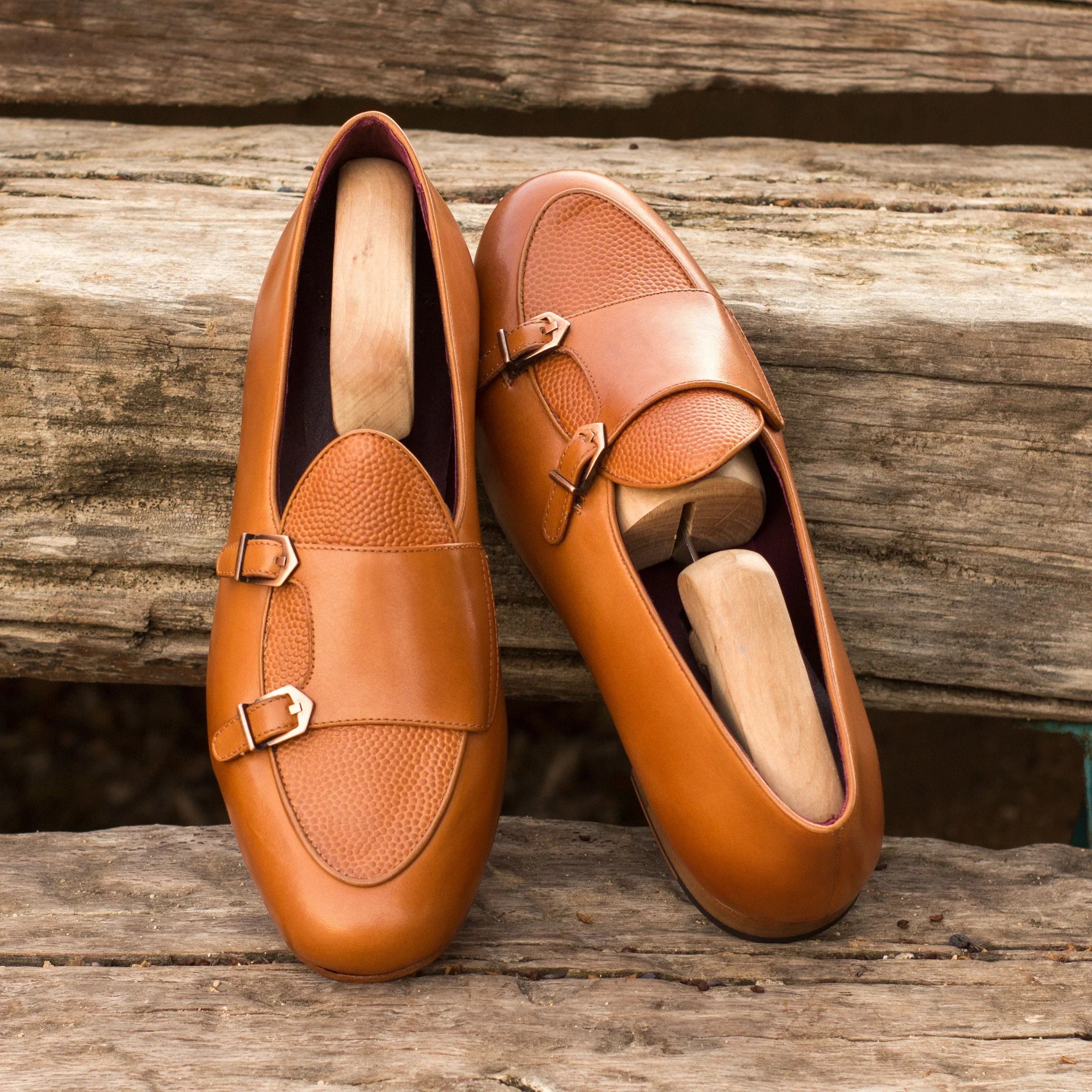
The double monk is the extrovert. Two straps mean more architecture across the foot, a stronger horizontal line, and a shoe that photographs beautifully but demands a little more confidence to carry. It belongs with sharper tailoring — a well-cut suit, cropped or clean-breaking trousers, and the willingness to let the shoe be the punctuation mark of the outfit. Worn with the top buckle done and the second left artfully undone, as the Italians like to, it becomes almost roguish.

How to wear the buckle without looking like you're auditioning
The monk strap's one genuine risk is theatricality. Because it is inherently a statement, it rewards restraint everywhere else. A few working principles:
- Let the shoe be the loudest thing you're wearing — and only just. Monks pair best with tailoring that is quiet and well-fitted. The buckle supplies the drama; your trousers should not compete.
- Mind the break. A slightly shorter trouser break shows the strap and lets the shoe read as intentional. A full puddle of fabric hides the very detail you bought the shoe for.
- Brown over black, most of the time. Black monks skew formal and a little severe; brown, tan, and burgundy show off the leather's depth and are far more useful across a week.
- Keep the buckle honest. A discreet silver or brass buckle ages gracefully. Anything oversized or overly polished starts to look like costume.
The case for colour — and for making it your own
Because the monk strap already sits slightly outside convention, it is the ideal canvas for the thing plain lace-ups can rarely get away with: a hand-applied patina. A single monk finished by hand — layering translucent dye over Italian crust leather so the colour shifts from deep to bright across the vamp — takes the shoe's inherent character and turns the volume up in exactly the right way. A patina monk in blue or burgundy is a shoe with a face, no two pairs quite alike, and it reads as personal rather than showy.

This is where made-to-order genuinely earns its keep. A monk strap is one of the few dress shoes whose whole appeal is that it isn't the default choice — so specifying the leather, the finish, and the depth of colour yourself is less indulgence than logic. You are already buying a shoe that declines to blend in. You may as well make sure it blends in on your terms.
Six centuries later, still the interesting choice
What I find most appealing about the monk strap is how little it has changed and how much that has come to matter. The monks wanted a shoe that fastened securely and asked nothing of fashion. Six hundred years on, that same buckle is what makes the shoe interesting — a small piece of hardware that says its wearer thought about the decision. In a wardrobe full of laces and slip-ons, that is a rarer signal than it should be. Wear it well, and the monk strap does what all the best clothes do: it looks entirely at ease, precisely because it isn't trying to.

Lascia un commento
Questo sito è protetto da hCaptcha e applica le Norme sulla privacy e i Termini di servizio di hCaptcha.