Article: The Elastic Revolution: How the Chelsea Boot Walked From Victorian Stables to Rock-and-Roll Royalty
The Elastic Revolution: How the Chelsea Boot Walked From Victorian Stables to Rock-and-Roll Royalty

There is a particular sound a good Chelsea boot makes against pavement — a clean, unhurried click, with none of the clatter of a hard-heeled oxford. It is the sound of a man who has decided not to bother with laces and has lost nothing in the bargain. Few shoes carry as much cultural freight in so plain a silhouette. The Chelsea boot is, at heart, a tube of leather with two elastic gussets and a loop at the back. And yet it has been worn by Victorian equestrians, Mod guitarists, spaghetti-western gunslingers, and more than one reigning monarch. Not bad for a boot with no fastenings to speak of.
A Boot Born in the Saddle
The story begins, as so many good menswear stories do, with a practical problem. In the 1830s, Queen Victoria's shoemaker, J. Sparkes-Hall, was trying to solve the nuisance of lace-up riding boots — fiddly to fasten, slow to remove, prone to gaping. The breakthrough came with a newly patented material: vulcanised rubber, which could be woven into fabric to create a stretchy, springy panel. Sparkes-Hall set that elastic into the sides of a close-fitting ankle boot, patented the design in 1851, and presented it to the Queen. She reportedly walked in them daily. The marketing, for once, wrote itself.
What made the boot brilliant was its honesty. There was nothing decorative about it. The elastic let a rider pull the boot on in seconds and kept it snug in the stirrup; the pull tab at the heel gave the needed leverage. For most of the nineteenth century it was simply a sensible town-and-country boot, worn by men and women alike, without a whiff of the rebellion it would later come to symbolise. It was, in the language of the period, an "elastic-sided boot" — the name "Chelsea" would not arrive for another hundred years.

The King's Road Rebaptism
Fast-forward to the late 1950s and early 1960s, and the boot found itself at the centre of a youthquake it never asked to join. The Chelsea district of London — specifically the King's Road — had become the headquarters of the "Chelsea Set," a loose confederation of young artists, filmmakers, models, and bohemians who gave the area its charge. The ankle boot, slimmed down and often topped with a Cuban heel, became their footwear of choice, and the neighbourhood lent it a name that finally stuck.
Then came the Mods. For the sharp-dressing, scooter-riding young men of early-sixties Britain, the Chelsea boot was a gift: clean, narrow, Italian-looking, and perfectly suited to the slim trousers and tailored silhouette that defined the subculture. When the decade's most famous band adopted a version with a higher Cuban heel — a style quickly nicknamed the "Beatle boot" after the firm Anello & Davide cobbled them — the boot's transformation from equestrian tool to cultural icon was complete. What had been a practical riding boot was now the uniform of modernity itself.
Cowboys, Dandies and the Boot's Wandering Eye
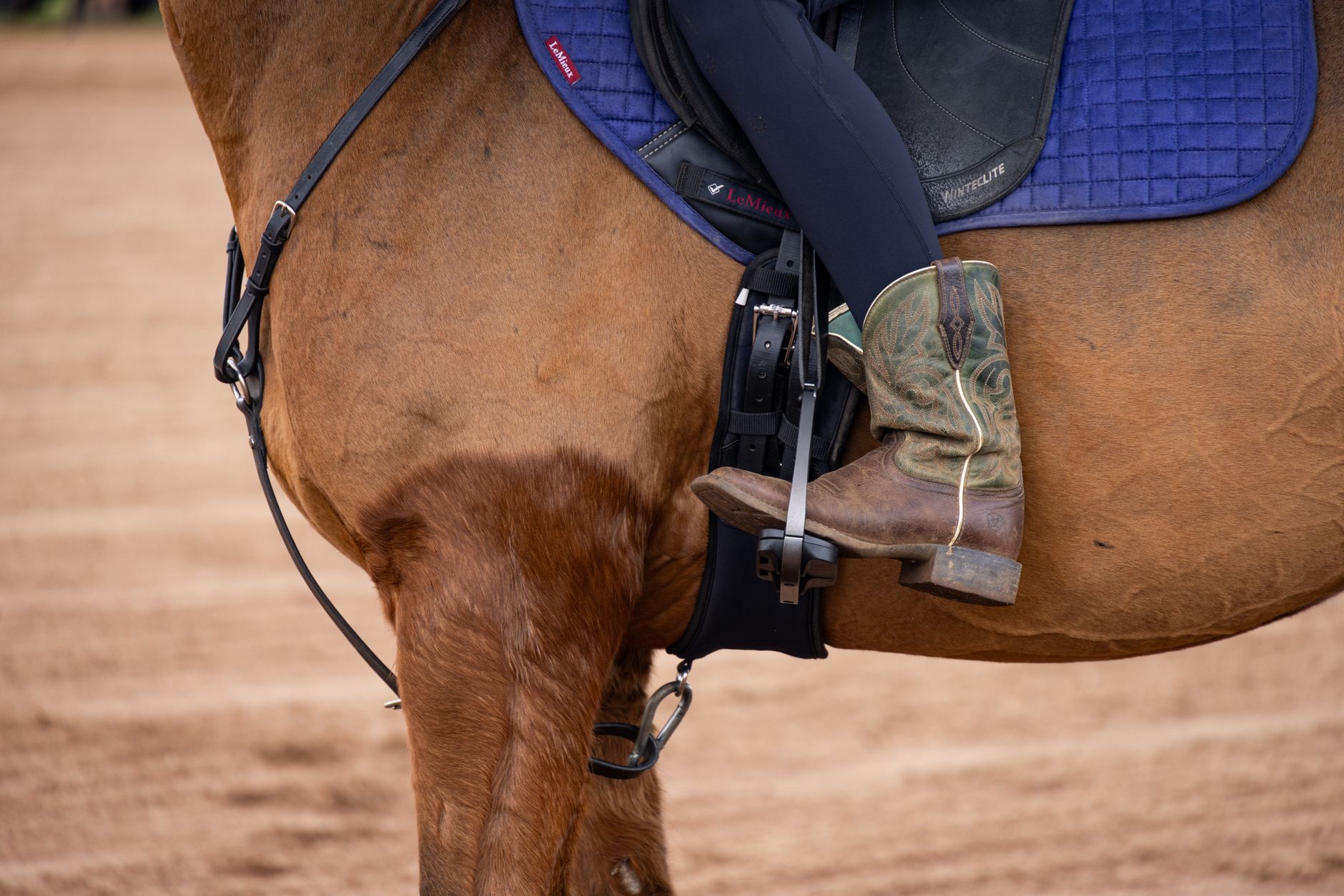
Part of the Chelsea boot's genius is that it refuses to belong to any single tribe. By the mid-sixties it had crossed the Atlantic and lodged itself in the American imagination too. Think of the lean, elastic-sided boots worn in the spaghetti westerns of the era — a frontier reading of the same silhouette, scuffed and dust-caked rather than polished. In the hands of rock musicians through the seventies and into the glam and punk years, the boot kept mutating: suede, snakeskin, stacked heels, winkle-picker toes. It became a canvas onto which each generation projected its idea of cool.
And then, as all great classics do, it settled down. By the time the big Italian and British houses were building their ready-to-wear worlds, the Chelsea boot had been quietly re-domesticated — returned to the realm of good tailoring and considered casual dressing. Saint Laurent made it a staple of its rock-inflected menswear; countless others followed. The boot had come full circle: from a tool of the establishment, through rebellion, and back to the wardrobe of the discerning man who simply wants one boot that does nearly everything.
Why It Still Works
The Chelsea boot endures because it solves a problem most men didn't know they had: how to look pulled together without looking like you tried too hard. It sits in the sweet spot between a dress shoe and a casual boot. Worn with grey flannel trousers and a sport coat, it reads elegant. Worn with raw denim and a knit, it reads easy. It is the rare shoe that can be the most formal thing in one outfit and the most relaxed in another.
A few principles separate a good Chelsea boot from a forgettable one:
- The elastic should be discreet. Panels in a tone that blends with the leather keep the line clean; a jarring contrast cheapens the whole thing.
- The toe matters. An almond or softly rounded toe ages far better than an aggressive point — the latter dates a boot to whichever year it was fashionable.
- The ankle must be snug. A gaping shaft is the fastest way to ruin the silhouette. The whole appeal is that close, cut-to-the-leg line.
- Consider the material. Suede softens the boot into something weekend-ready; a hand-finished crust leather with real depth of colour pushes it toward tailoring.
That last point is where craftsmanship earns its keep. A Chelsea boot made in Italian crust leather — tanned but left undyed until the finishing stage — allows for the kind of layered, hand-applied patina that gives a boot genuine character rather than a flat, factory wash of colour. Que Shebley's Deneb Chelsea Boots sit squarely in that tradition: a clean, modern ankle silhouette treated as something to be finished by hand rather than stamped out by the thousand.

The Great Survivor
What's remarkable about the Chelsea boot is not that it was fashionable in 1851, or 1964, or last autumn — plenty of styles manage a good run before fading. It's that it has been continuously useful for nearly two centuries while meaning something completely different in each era. A boot for riding. A boot for rebelling. A boot for dressing well without ceremony. It has absorbed every subculture that borrowed it and emerged, each time, looking essentially like itself.
Perhaps that is the deepest proof of good design: the ability to be reinterpreted endlessly without ever needing to change. The Chelsea boot was right the first time. Everyone since has merely been catching up — queen, Mod, cowboy and gentleman alike, all pulling at the same little loop of leather at the heel.

Laisser un commentaire
Ce site est protégé par hCaptcha, et la Politique de confidentialité et les Conditions de service de hCaptcha s’appliquent.