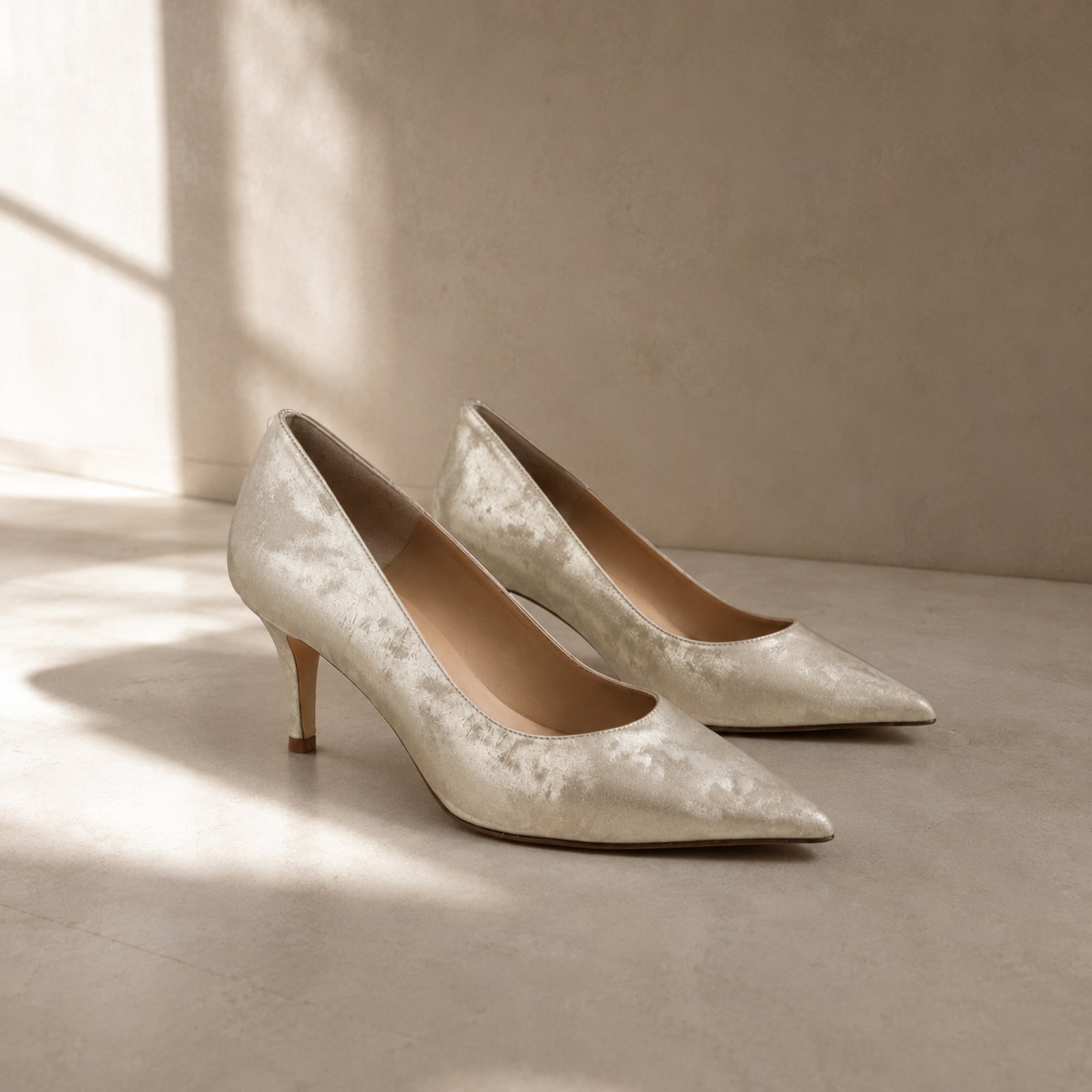
The Case for Suede: How Menswear's Most Distrusted Leather Became a Badge of Ease

There is a particular kind of man who wears suede, and for most of the twentieth century, polite society did not want to be introduced to him. He was the fellow who turned up at the country weekend a little too tanned, a little too charming, with shoes the colour of a fawn's flank and no visible means of support. Suede was the leather of seducers, of remittance men, of people who were fun but not to be trusted with the silver. To wear it was to announce, quietly but unmistakably, that you were not entirely serious.
How strange, then, that suede now reads as the opposite — as the mark of a man so secure in his taste that he no longer needs the armour of a mirror shine. The nap has been rehabilitated. Understanding how that happened is a small lesson in how menswear actually works: not by rules handed down, but by confident people breaking them until the rule quietly changes sides.
A Prince, a Scandal, and a Pair of Brown Shoes
The turning point, as with so much of what men wear, runs through Edward, Prince of Wales — later, briefly, Edward VIII. In the 1920s and '30s he did more damage to Edwardian dress codes than any tailor could, and one of his favourite weapons was brown suede. He wore it with grey flannel, in daylight, in town, at a moment when 'no brown in town' was practically law and suede specifically was considered raffish to the point of insult. Older men reportedly found it appalling. Younger men found it liberating, and copied him instantly.
What the Prince understood was that suede reads as softness, and softness reads as leisure. A high-shine calf oxford says you have somewhere formal to be and a valet to get you there. Suede says the afternoon is yours. That was scandalous in a world organised around obligation. It is aspirational in a world organised around escaping it.
The material picked up other reputations along the way. There was the wartime association — suede desert boots worn by British officers in North Africa — which lent it a certain rugged legitimacy. And there was the pop-culture detonation of 1955, when Carl Perkins wrote 'Blue Suede Shoes' and Elvis Presley turned it into an anthem. Suddenly suede wasn't the cad's shoe; it was the rebel's shoe, the thing worth guarding with 'do anything that you want to do, but uh-uh, honey, lay off of my shoes.' A leather that had signalled decadence now signalled youth.

Why Suede Actually Works
Strip away the mythology and suede earns its place for practical reasons. It is, at its best, the most forgiving material in a man's wardrobe. A polished calf shoe demands a matching level of effort from everything around it; scuff it and the flaw shouts. Suede does the opposite. Its texture absorbs light rather than throwing it back, which means it softens a look, dresses down the sharpest suit, and hides the small indignities of real life. It is why a navy suit with brown suede reads as considered rather than corporate, and why a suede loafer with unstructured tailoring is the uniform of every man who looks good in photographs he didn't know were being taken.
Texture is the point people miss. Menswear at the higher end is increasingly a game of texture rather than colour — flannel against knit, grenadine against poplin. Suede is the footwear equivalent of that instinct. It gives an outfit somewhere for the eye to rest.
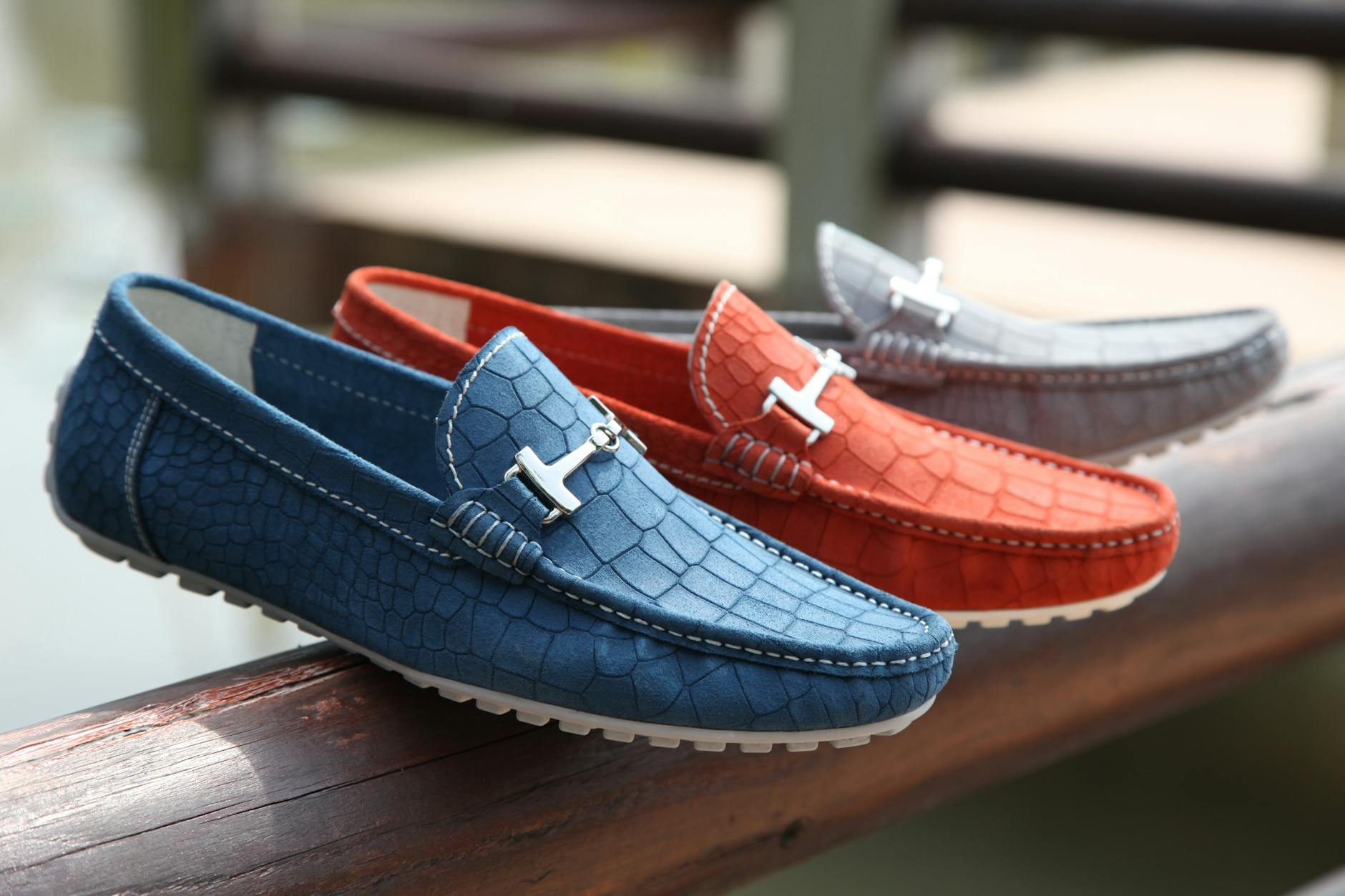
The driving shoe is where suede feels most itself, precisely because both the shoe and the material share that same DNA of ease. Take something like the Que Shebley San Diego Driver in green suede: the colour is confident, the nap keeps it from ever looking loud, and it lands exactly in that Prince-of-Wales register of a man who has better places to be than the office.

The Colour Question
Here is where most men lose their nerve. Suede tempts you into safe brown and then leaves you there. That's a waste. The material practically demands colour, because its matte surface tempers shades that would look garish in glossy calf. A forest green, a smoked navy, a deep tobacco — all of these turn sober in suede.
My own rule, for what it's worth:
- Brown suede is the workhorse: dark chocolate for tailoring, lighter snuff or fawn for chinos and denim. This is the Duke of Windsor's territory and it never dates.
- Coloured suede — green, blue, burgundy — is for the man who already owns the brown and wants a second act. A dark brown suede driver like the NY Driver is the sensible entry point; the greens and reds come later, once you trust yourself.
- Suede and calf together is the connoisseur's move: a boot that pairs box calf with a suede panel gives you the ruggedness of one and the softness of the other, and reads as far more thoughtful than either alone.

The Myth of Fragility
The last objection is always the weather. Suede, men insist, is delicate — a fair-weather indulgence that dissolves in the first shower. This is largely nonsense, and it has been for decades. Clarks built a global business on suede desert boots designed for soldiers in the sand. The nap can be protected with a decent spray, brushed back to life with a rubber-crepe brush, and it handles light rain far better than the panicked owner expects. What it can't survive is neglect and salt — but then, neither can calf.
Where suede genuinely earns its keep in bad weather is on boots, because the texture disguises the marks that a wet pavement inevitably leaves. A dress boot that blends black box calf with black suede — the Benny Octavian is a good example of the type — gives you a shoe robust enough for a grey city evening but softer and more interesting than a plain black lace-up. It's the sort of thing that looks equally correct with a topcoat and with a heavy roll-neck.

The Confidence It Takes
What all of this really comes down to is nerve. Suede is one of the few materials in menswear that still requires a small act of courage, because it refuses to hide behind formality. It won't do your talking for you the way a black oxford will. It asks you to have an opinion about colour, about texture, about how much ease you're willing to show.
That's precisely why the men who wear it well always look like they mean it. The Prince of Wales wasn't dressing down when he pulled on brown suede in defiance of half of London — he was dressing with the confidence that the room would eventually agree with him. It did. A century later, the shoe that was supposed to mark you as unserious has become the surest sign that you know exactly what you're doing.

Laisser un commentaire
Ce site est protégé par hCaptcha, et la Politique de confidentialité et les Conditions de service de hCaptcha s’appliquent.