Die letzte Entscheidung des Bräutigams: Warum Hochzeitsschuhe mehr Aufmerksamkeit verdienen als die Torte
There is a peculiar blind spot in the way men prepare for their weddings. They will re-book three fittings to argue about the pitch of a lapel. They will taste seven cakes and pretend to detect the difference. They will lie awake wondering whether the boutonnière should be a ranunculus or a rose. And then, on the morning of, they will reach into a wardrobe and pull out whatever black shoes they already own — scuffed at the toe, worn at the heel, last polished for a funeral.
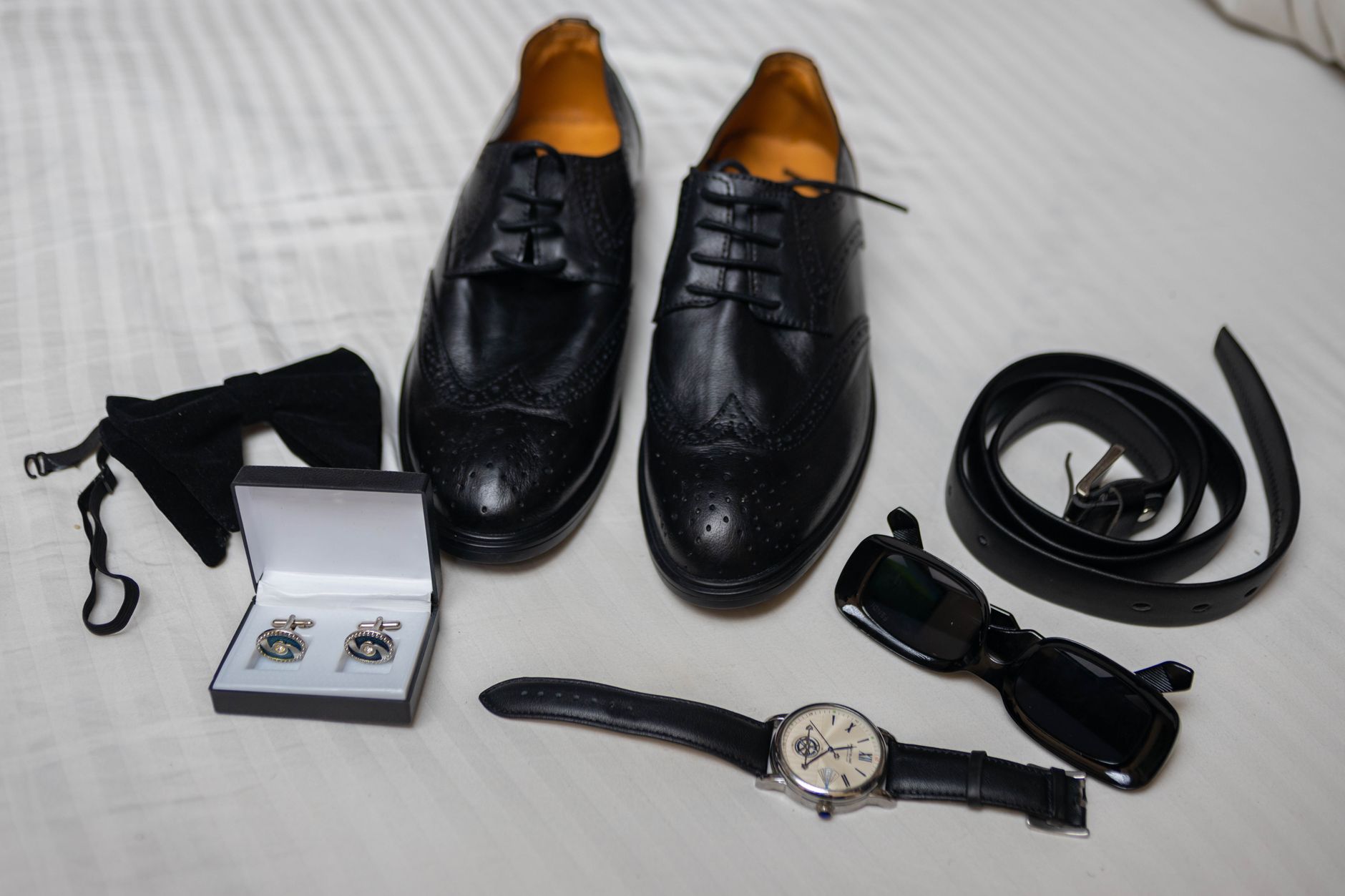
It is the great irony of the wedding-day uniform. The shoes are the one element that actually has a job to do. They carry you from the first-look photographs through the ceremony, the receiving line, the long lunch, the speeches, and the part of the night where a distant cousin insists on teaching everyone a dance. They are also, quietly, the detail every wedding photographer eventually shoots in close-up: the laid-out flat lay of watch, ring, cufflinks, and shoes that has become a genre unto itself.
What the Movies Taught Us (and Got Right)
Cinema has always understood that a groom's shoes carry weight. Think of the opening wedding of The Godfather — a Sicilian-American celebration where every man's polished leather is part of the choreography, a signifier of belonging and pride. Or the crisp morning dress of the British royal weddings, where highly burnished black Oxfords sit beneath grey striped trousers with the precision of a guardsman's parade kit. These images stuck because the footwear was never an afterthought. It completed a sentence the rest of the outfit had started.
The lesson is simple and slightly unfashionable to say out loud: formality travels from the ground up. A beautifully cut suit undermined by clumsy shoes reads as borrowed. The reverse — modest tailoring finished with genuinely excellent footwear — reads as a man who knows what he is doing.
Matching the Shoe to the Register of the Day
Weddings are not one dress code but a dozen, and the shoe should answer the specific question the invitation is asking. A useful way to think about it:
- Black tie or the most formal morning dress: a plain black whole cut or a cap-toe Oxford, mirror-shined. Nothing broguing, nothing brown. This is the one context where restraint is the entire point.
- A classic city or church wedding in a lounge suit: a dark Oxford or a refined derby, black or a deep espresso brown depending on the suit. A little more expression is welcome here.
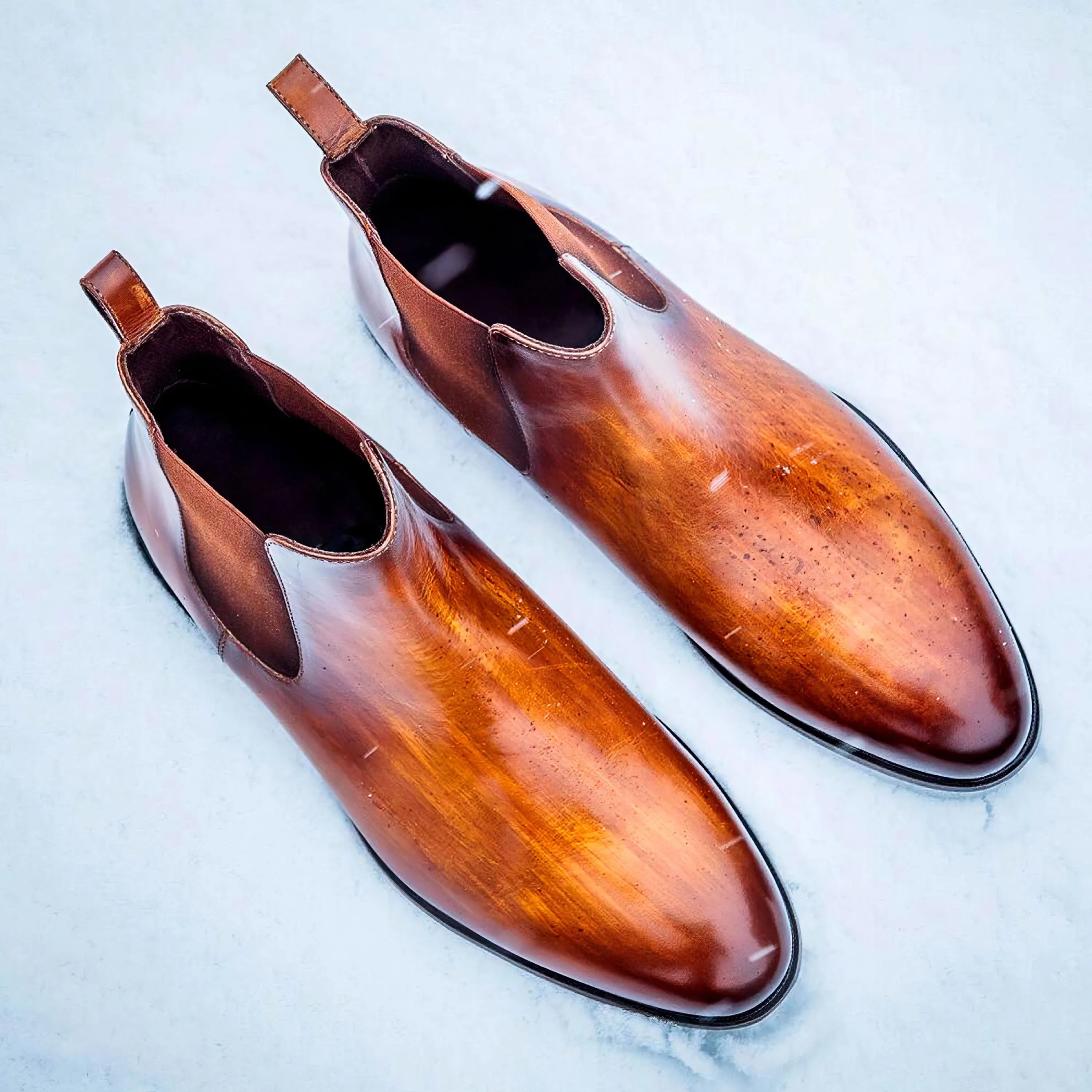
- A summer, garden, or destination wedding: a lighter register entirely — a loafer with real character, a tan or oxblood patina, even a well-made Chelsea boot under linen trousers.
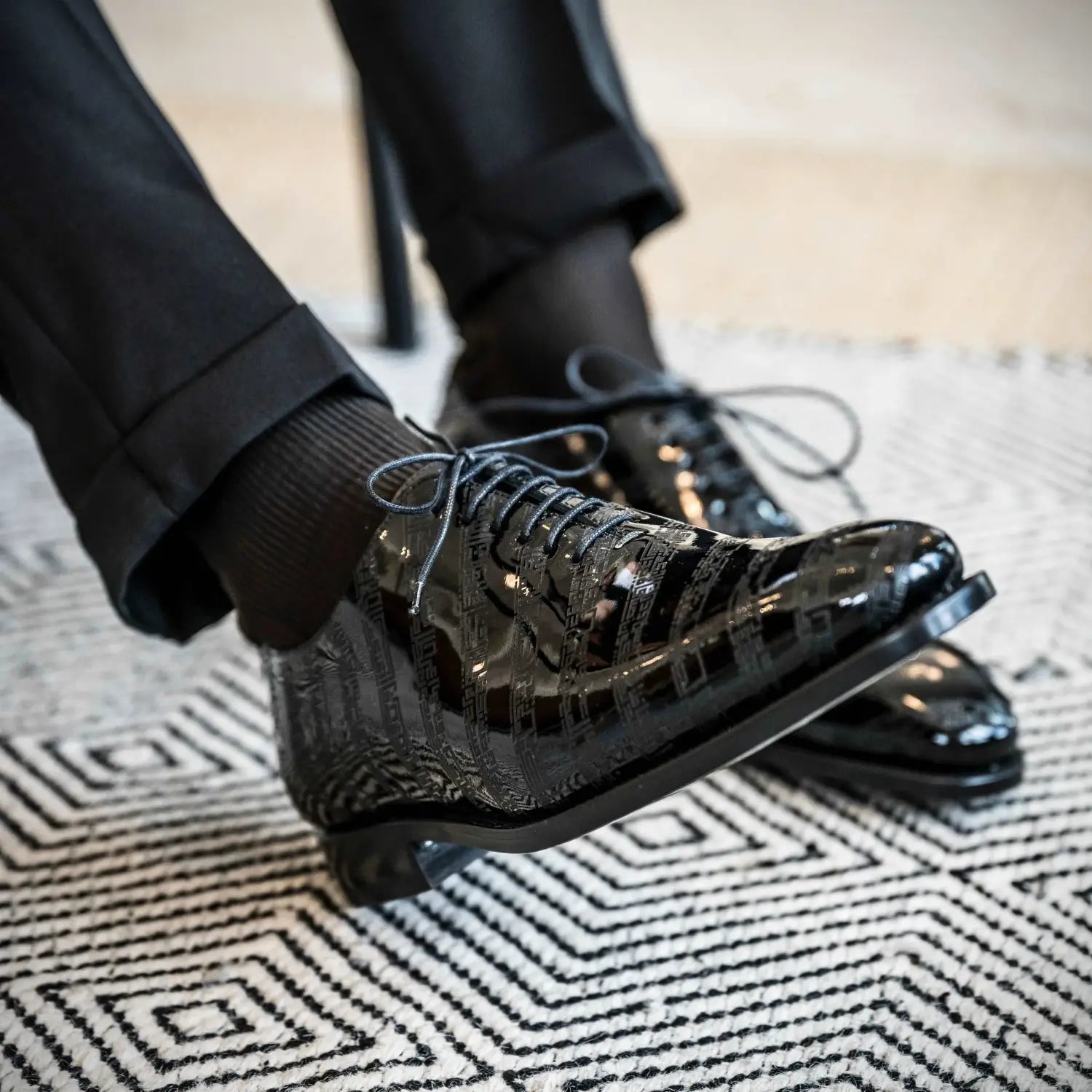
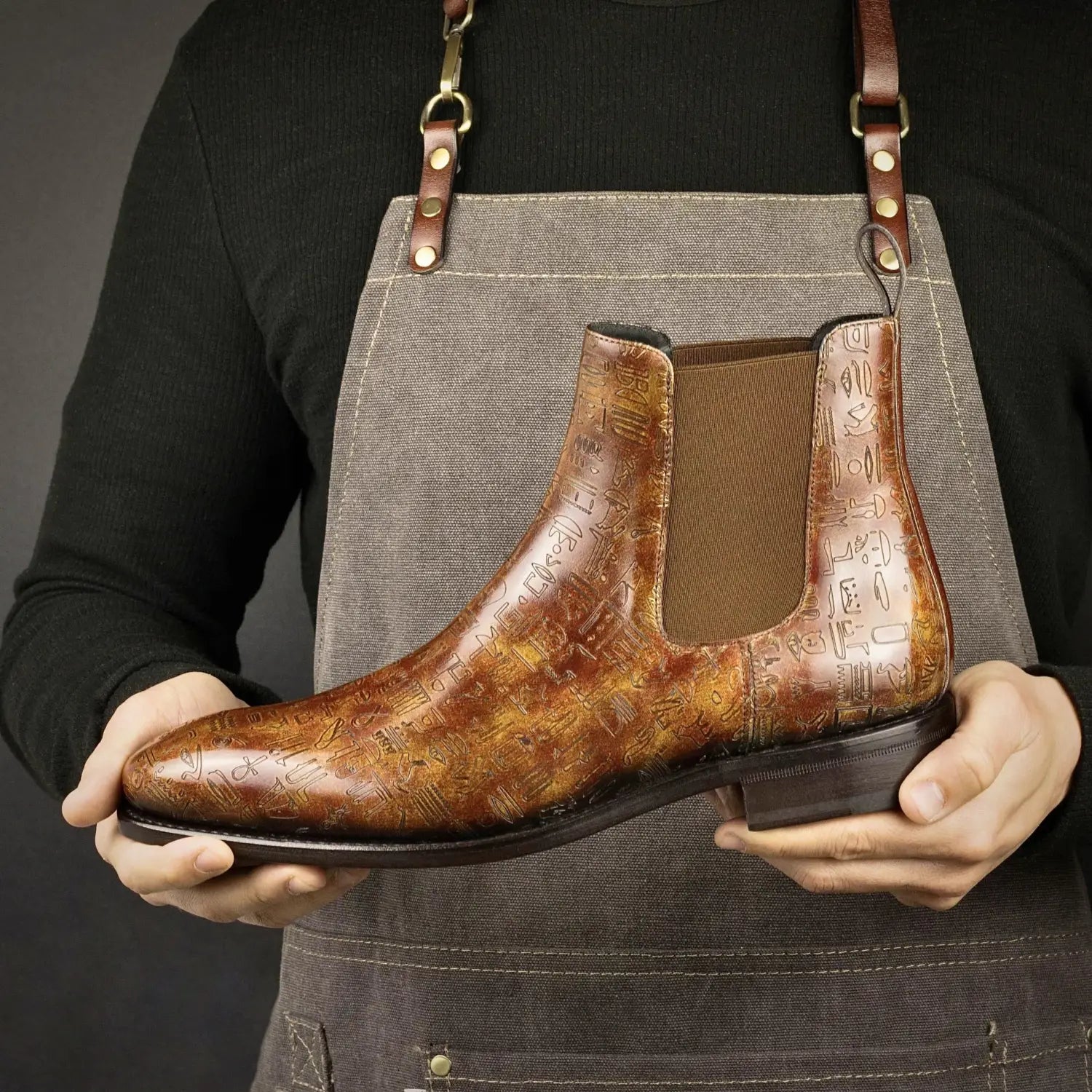
- The groom who wants to be remembered: a hand-painted patina finish, where the colour shifts across the leather from shadow to light. It photographs like nothing off a shop shelf.
That last category deserves a moment, because it is where menswear has genuinely loosened up in the past decade. Grooms who a generation ago would have defaulted to plain black now happily choose a burgundy that reads brown until the light catches it, or a smoked navy that looks almost black indoors and comes alive outside. A patina loafer such as Que Shebley's Poet Nour VIII — hand-finished so the colour has depth rather than a flat factory tone — is the sort of shoe that works under a wedding suit and then keeps working for years of dinners afterwards.


The Case for the Whole Cut
If you want one shoe that behaves impeccably across the widest range of weddings, it is hard to beat a whole cut. Cut from effectively a single piece of leather with minimal seams, it has an uninterrupted, almost sculptural surface that catches light beautifully — which is exactly what you want when a photographer crouches for the detail shot. It is the most formal silhouette in the dress canon precisely because it hides nothing; there is nowhere for a flaw to hide, which is why it is also the most demanding shape to make well.
In a two-tone patina, the whole cut becomes something more expressive without ever tipping into costume. Worn with a solid navy or charcoal suit, it does the quiet work of making an off-the-peg outfit look considered.

When a Boot Beats a Shoe
Not every wedding is a marble-floored affair. Autumn and winter ceremonies, countryside venues, and anything involving grass, gravel, or a barn make a strong case for a dress boot. A sleek Chelsea or a buttoned dress boot reads as intentional rather than practical, and it solves the perennial problem of the groom sinking into a lawn during the golden-hour photographs. A dress boot with a genuine patina finish, worn under slim trousers, carries a slightly romantic, old-world confidence — think of the tailoring in a period drama, updated for a man who actually wants to dance later.

The Practical Part Nobody Mentions
A wedding day is, physically, closer to a marathon than a dinner party. You will be on your feet for hours, often on hard floors, frequently in shoes you have owned for less than a month. Two rules will save you. First, never wear brand-new shoes for the first time on the day itself — break them in over a few evenings so the leather has begun to mould to your foot. Second, buy for the last hour of the night, not the first: a shoe that feels perfect at 10 a.m. can feel like a vice by midnight if it was chosen purely on looks.
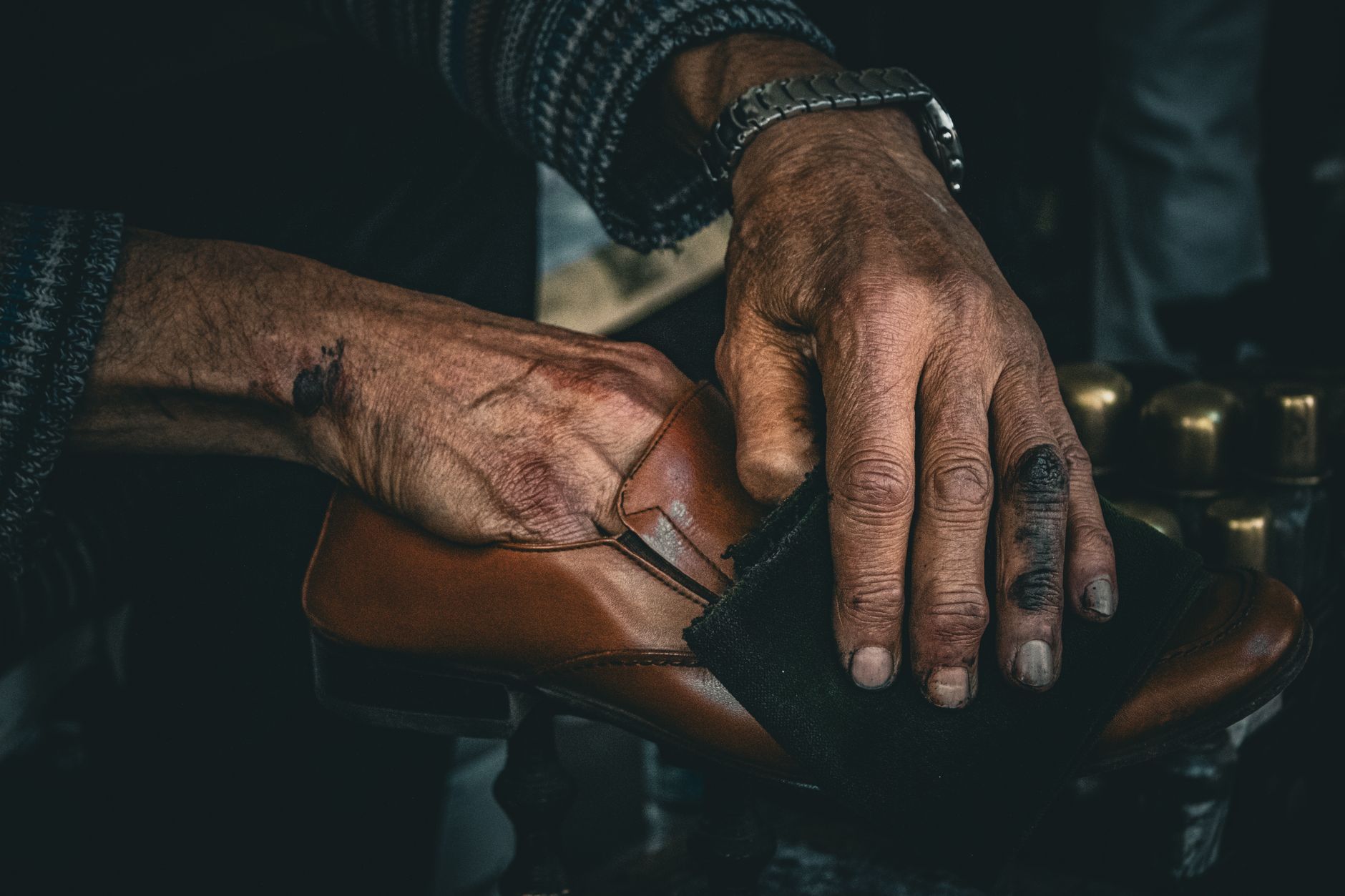
This is where made-to-order earns its keep. A shoe built to your measurements, on a last that suits your foot, in the colour and construction you actually want, removes the compromise that store shelves force on you. Houses that work this way — Que Shebley among a small handful hand-finishing in Italian crust leather — let a groom specify the register of the day rather than settle for the nearest approximation.
Buy the Marriage, Not the Wedding
Here is the argument that should settle it. The cake is gone by Sunday. The flowers wilt. The suit, if you are honest, may not survive many outings beyond the day. But a properly made pair of leather shoes, resoled when the time comes and cared for with a little cream and a shoe tree, will still be on your feet a decade later — at anniversaries, at other people's weddings, at the christenings that follow. Choose them as though you will remember them, because you will. It is, in the most literal sense, the last decision you make before the rest of your life. Make it a good one.

Einen Kommentar hinterlassen
Diese Website ist durch hCaptcha geschützt und es gelten die allgemeinen Geschäftsbedingungen und Datenschutzbestimmungen von hCaptcha.