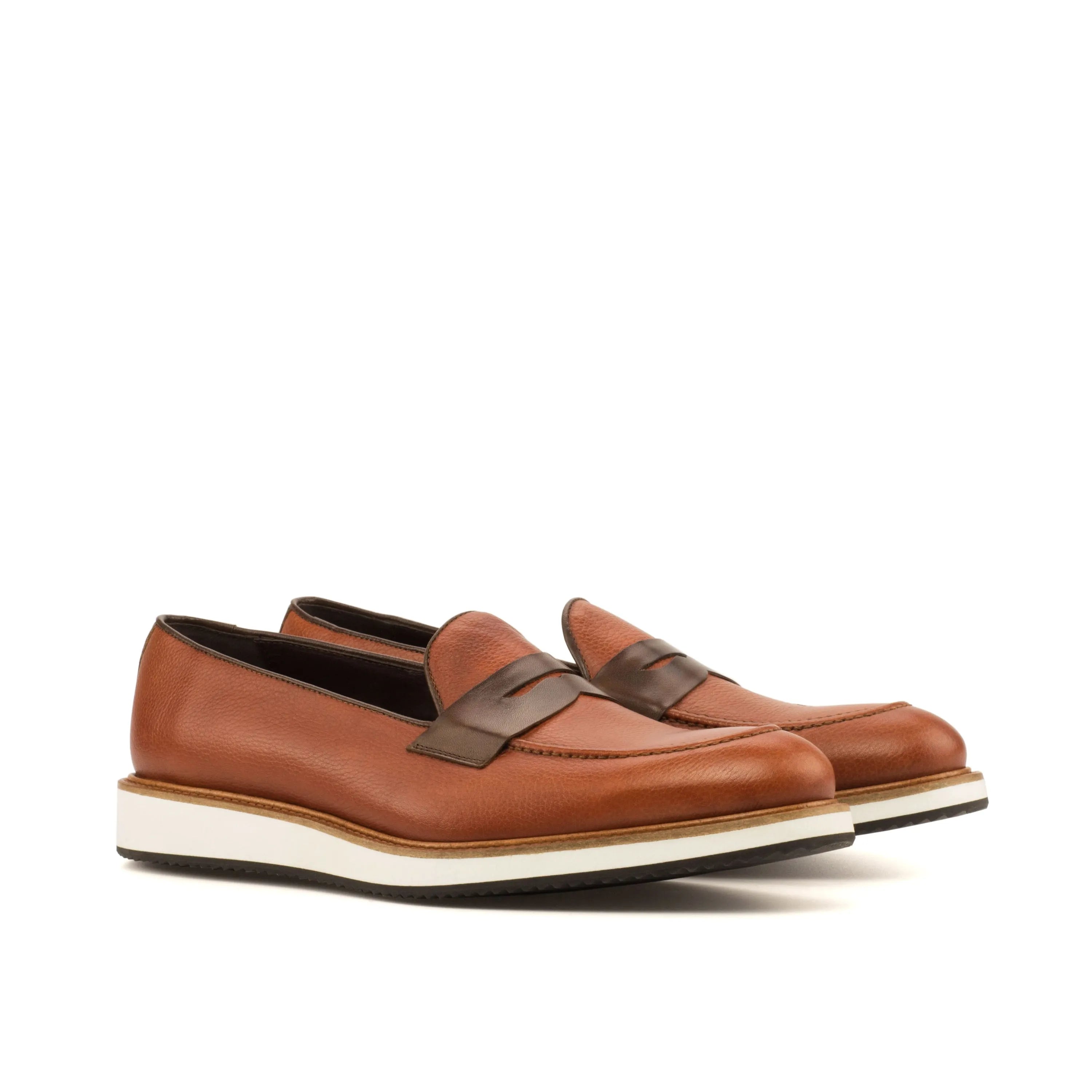
Oxblood: The One Shoe Colour That Refuses to Behave

There is a moment, usually in a man's early thirties, when the black-shoe-and-brown-shoe binary starts to feel like a straitjacket. He owns the plain black oxfords for funerals and interviews. He owns the tan derbies for weekends. And then, somewhere between a wedding and a work trip, he sees a shoe that is neither — a deep, bruised red that looks almost brown in shadow and flares to garnet under a lamp — and something clicks. That colour is oxblood, and it has been quietly solving problems in men's wardrobes for the better part of a century.
The tailoring trade has a dozen names for it: oxblood, burgundy, claret, cordovan, wine, bordeaux. The distinctions blur, and honestly they should. What matters is the effect. Oxblood is a colour with a foot in both camps — formal enough to slip under a navy suit without a word of protest, warm enough to loosen up with denim on a Saturday. It is the diplomat of the shoe rack.
A colour born in the tannery, not the design studio
The name is not marketing. Oxblood was, for centuries, a literal reference — a dark red-brown produced by dyes and finishes that leaned on the deep tones tanners could coax out of vegetable-tanned hides. The most romantic version of the story lives in shell cordovan, the dense, non-porous leather cut from the flat muscle of a horse's hindquarter. When Chicago's Horween tannery began finishing cordovan in the early twentieth century, its signature colour #8 — a mottled oxblood that ages from cherry to near-mahogany — became a cult object among shoe obsessives, and remains one today.
But you didn't need a horse to get there. Calf leather takes oxblood beautifully, and the colour travelled fast through the twentieth-century wardrobe. It showed up on the brogues of interwar English gentlemen who wanted something less severe than black in the country. It anchored the Ivy League look at midcentury, where a burgundy penny loafer read as prep-school shorthand. And by the time the Duke of Windsor was photographed breaking every rule he could find, oxblood had become the connoisseur's quiet flex — the colour you chose when black felt too obvious and brown too casual.

Why it works with almost everything
The genius of oxblood is chromatic. It sits close enough to brown to carry the same easy warmth, but its red undertone gives it a richness that plays against cool colours — navy, charcoal, grey flannel — the way a good tie does. Consider the combinations a single pair unlocks:
- Navy suit, oxblood shoes. The single most reliable pairing in menswear after black-tie. The red lifts the navy instead of matching it, which is precisely why it looks intentional.
- Grey flannel and oxblood. A cold colour warmed from the ground up. This is the combination that makes a Monday feel less like a sentence.
- Raw denim and an oxblood loafer or boot. The reason the colour never feels stuffy. It dresses jeans up without pretending they're something they aren't.
- Olive, tan, and earth tones. Oxblood behaves like the darkest berry in a bowl of autumn fruit — it belongs.
Black, by contrast, is a full stop. It closes an outfit. Oxblood keeps the sentence going. That is the whole argument for it, and it is a good one.
The boot that makes the case
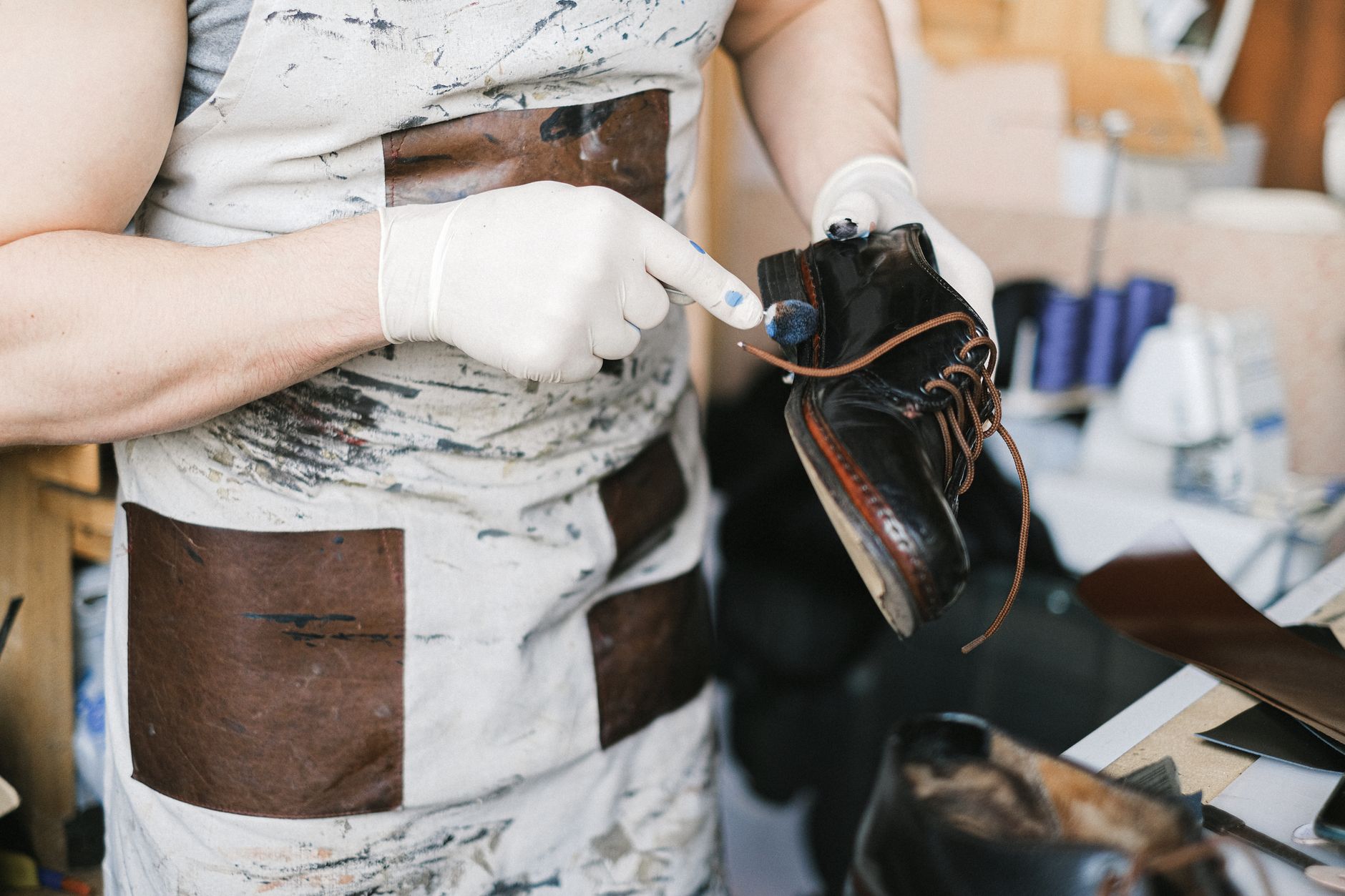
If you want to understand oxblood's range in a single object, look at it on a dress boot. There is something about the colour on a high-shafted silhouette — the way it catches light along the vamp and sinks into shadow at the ankle — that no photograph fully captures. A jodhpur boot in burgundy, with its clean lines and single strap, manages to look equestrian and urbane at once, which is a difficult trick for any shoe to pull off.

The word to watch on shoes like this is patina — and it matters more than most buyers realise. A flat, factory-dyed burgundy is a single note. A patina is a chord. Built up by hand in translucent layers over pale Italian crust leather, a good patina lets the colour breathe: darker at the toe and heel, lighter across the instep, with the grain of the hide showing through like watermark. This is the difference between a shoe that looks painted and one that looks alive, and it is why houses that work in crust leather — Que Shebley among them — treat oxblood less as a colour off a shelf than as something coaxed out of the leather one coat at a time.
From the balmoral boot to the fairway
The formal end of the oxblood spectrum reaches its logical conclusion in the balmoral boot — that sleek, closed-lacing silhouette with a horizontal seam across the ankle, historically the most dressed-up boot a man could own. In burgundy, it becomes the sort of thing you can wear under a suit in December without anyone accusing you of overthinking it, which of course you have.

And then, at the opposite pole, the colour turns up somewhere it has no business being as elegant as it is: the golf course. The modern golf shoe has spent two decades trying to look like a running trainer, which is a shame, because the old spirit of the game lived in leather. A burgundy tasselled loafer built for the fairway — spikes below, black-tie manners above — is the kind of object that reminds you golf was once a game you dressed for.

How to keep it honest
Oxblood asks for a little more thought than black, and rewards it. Rotate your pairs and use cedar trees so the leather dries in shape. Feed it a neutral cream rather than a pigmented one unless you know exactly what shade you're chasing — oxblood is easy to muddy and hard to un-muddy. And resist the urge to over-polish it to a mirror. The colour looks best with depth, not glare; a soft, hand-rubbed shine lets those layered reds do the talking.
Most of all, don't save it. The men who look best in oxblood are the ones who reach for it on a Tuesday, not just a wedding. It is a colour that gets better the more contexts you push it into — office, dinner, denim, the first tee. Black and brown will always have their jobs. But oxblood is the one that shows up everywhere and never looks like it's trying. In a wardrobe full of decisions, that is about the easiest one a man can make.

Einen Kommentar hinterlassen
Diese Website ist durch hCaptcha geschützt und es gelten die allgemeinen Geschäftsbedingungen und Datenschutzbestimmungen von hCaptcha.