Maßgeschneiderte Anfertigung vs. Maßanfertigung: Wahrheiten enthüllt
Table of Contents
- Table of Contents
- The Call-Out
- The Deep Dive
- Que Shebley’s Realness
- The Industry Giants
- The Rationale: Why Artisan over Mass-Market
- Pros of Going Artisan
- Cons of Mass-Market
- Closing
- FAQs
The Call-Out
Let's talk about the so-called "break-in period" for shoes crafted from cheap lasts. It's a con—plain and simple. You've been sold on the idea that pain equates to luxury. This myth serves corporate cash cows better than it does your soles. When legacy names like Berluti parade these shoes as refined, you're caught in a lie. The stark truth is clear: poorly crafted shoes don't need time to "soften"; they need saving.
The Deep Dive
Enter the battle arena: bespoke tailoring crafted at The House of Que Shebley versus the production line forcefulness of industry juggernauts. Let’s dissect the essence of 'bespoke'—an art form that defies mass production. Every stitch converses with the contours of the individual. Now compare this with "Made to Measure" offerings touted by Allen Edmonds: a balance of templates and tools—nothing more.
Que Shebley’s Realness

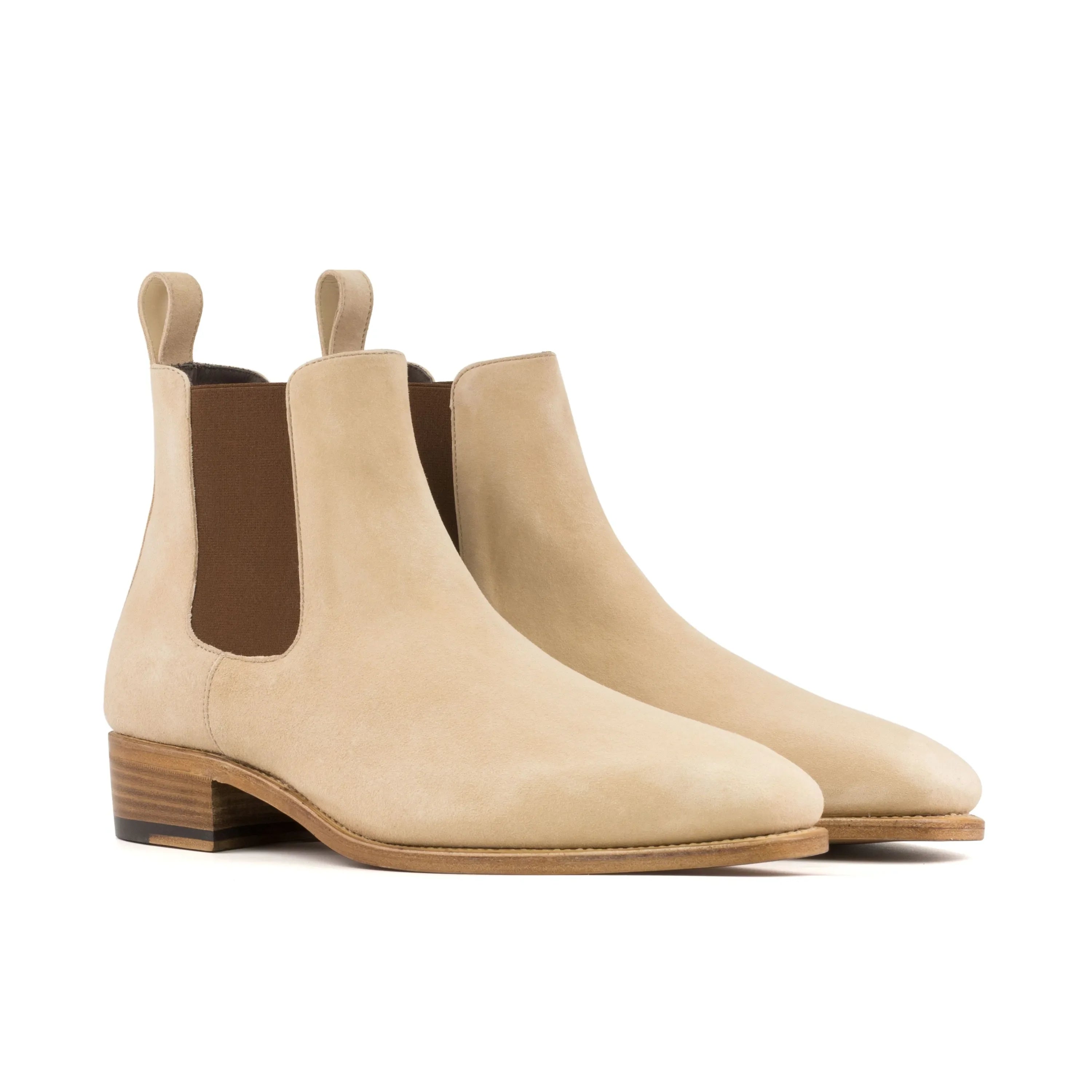
In the domain of true artisanship, we manifest precision. Our Deneb Chelsea Boots II belong to a lineage of hand-stitched reverence—a stark rebuttal to labels that don the "Made in Italy" tag despite assembly in high-volume facilities. Real craftsmanship is as personal as your fingerprint.
The Industry Giants
Santoni might offer a “custom” line, but it's a marriage of shortcuts. It’s like a genre film: produced for profit, masquerading as avant-garde. The needle skips the essence of style when manufacturing metrics dictate taste.
For a penetrating exploration of this duplicity, read our exposé, Bespoke Tailoring Vs Made to Measure: The Hidden Battle.
The Rationale: Why Artisan over Mass-Market
Forget the frills; let's cut to it:
Pros of Going Artisan

- Fit: Tailored pieces mean personalized comfort, not just a rearranged template. Feel the ease in every step with our Ralphie Octavian Boots II.
- Quality: Artisanal methods safeguard authenticity. Witness this in the unparalleled craftsmanship of Karma Alligator Loafers II.
- Durability: Investment in hand-stitched quality pays dividends as your style perseveres.
Cons of Mass-Market
- Compromise: You relinquish uniqueness for buzzwords and brand names.
- Aesthetic Fatigue: Uniformity breeds mediocrity. Why succumb to a sea of sameness?
- Shortcuts: From machine-stitching to corrected grain leather, corporate giants cut corners you can't afford to.
Discover more on the nefarious chemistry behind low-end "luxury" in The Deteriorating Equilibrium: The Chemistry Behind Low-Cost Luxury.
Closing

Enough said. You've heard the echo of machine-conveyed promises, now meet the whisper of Que Shebley's legacy. Our Vos Longwing Blucher II, a testament to uncompromised artistry, awaits those ready to reject the mainstream façade.
Step into authenticity today. Leave mass-produced illusions at the door. Wear the truth with the originality and soul it deserves.
For a deeper dive into why standardized lasts fall short, don’t miss Posture Consequences: How Standardized Lasts Miss the Mark. It's your stride; own it.
FAQs
What is bespoke tailoring?
Bespoke tailoring refers to the process of creating a garment that is made entirely to the client's specifications. This includes a personal consultation, custom pattern creation, and various fittings to ensure the final product fits perfectly.
How does made-to-measure differ from bespoke tailoring?
Made-to-measure involves taking a pre-existing pattern and altering it to fit the client's measurements. While it offers a level of customization, it typically does not provide the same degree of personalization and craftsmanship as bespoke tailoring.
Can I get a bespoke suit without multiple fittings?
While it is technically possible to receive a bespoke suit with fewer fittings, multiple sessions are highly recommended to ensure optimal fit and comfort, as the process involves fine-tuning the garment to the individual's unique body shape.
Which is typically more expensive: bespoke tailoring or made-to-measure?
Bespoke tailoring is generally more expensive than made-to-measure due to the extensive labor, materials used, and the time invested in crafting a unique piece tailored specifically to the client's preferences.
How long does the bespoke tailoring process usually take?
The bespoke tailoring process usually takes several weeks to a few months, depending on the tailor's workload and the complexity of the garment. Client consultations and multiple fittings can extend the timeline.
Is it worth investing in bespoke tailoring?
Investing in bespoke tailoring can be worthwhile for those who value quality, personal service, and a perfect fit. A bespoke suit or garment is often seen as a long-lasting addition to one’s wardrobe that offers exceptional comfort and style.
Are there any downsides to made-to-measure clothing?
While made-to-measure offers customization, the limitations of using a standard pattern can lead to less-than-perfect fits. Those with unique body shapes may find that made-to-measure doesn’t offer the same level of tailoring finesse as bespoke options.
How can I ensure I choose the right tailor?
To find the right tailor, research their credentials and experience, read client reviews, and request recommendations. Visiting their workshop and discussing your preferences can also help assess their suitability for your needs.
What materials are typically used in bespoke tailoring?
Bespoke tailoring often uses high-quality fabrics sourced from renowned mills. Common materials include wool, silk, linen, and cotton, with options for different textures, weights, and finishes to suit individual styles and occasions.

Einen Kommentar hinterlassen
Diese Website ist durch hCaptcha geschützt und es gelten die allgemeinen Geschäftsbedingungen und Datenschutzbestimmungen von hCaptcha.