مقال: The Rebel Cloth: How Tartan Fought Its Way From the Highlands Into Your Wardrobe
The Rebel Cloth: How Tartan Fought Its Way From the Highlands Into Your Wardrobe

No pattern in menswear carries as much baggage as tartan. Stripes are decorative. Houndstooth is polite. Paisley is a mood. But tartan — those interlocking bands of colour crossing at right angles — has been a uniform, a crime, a symbol of royalty, a battle flag for punks, and a shorthand for both the grouse moor and the mosh pit. Few textiles have been simultaneously banned by an act of Parliament and worn by a reigning monarch on holiday. Tartan has done both.
That contradiction is exactly why it endures. To wear tartan is to plug into a two-hundred-year argument about class, nation, and rebellion — usually without realising it. And in a moment when men are again reaching for pattern after years of quiet, muted, safe dressing, it's worth understanding what you're actually putting on.
A cloth the government tried to kill
Start with the fact that tartan was, briefly, illegal. After the Jacobite rising was crushed at Culloden in 1746, the British government passed the Dress Act, banning Highland dress — including tartan — for ordinary men across the Scottish Highlands. The aim was blunt: dismantle clan identity by outlawing its most visible symbol. The ban held for nearly four decades.
When it was finally repealed, something strange happened. Tartan didn't return as a working garment; it came back as romance. Sir Walter Scott stage-managed King George IV's 1822 visit to Edinburgh as a riot of tartan pageantry, and a few decades later Queen Victoria and Prince Albert fell for Balmoral, decorating the castle in plaid and even designing their own. The rebel cloth of a defeated people had been rebranded as the height of aristocratic taste. That whiplash — outlaw to establishment — is baked into every check to this day.

The clans, the mills, and the myth
Most of what people believe about "clan tartans" is younger than they think. The tidy idea that every Scottish family owns one specific, ancient sett was largely codified in the 19th century, helped along by weaving mills that were happy to sell certainty. That doesn't make tartan fake — it makes it a living design language rather than a fixed heraldry. The Black Watch, that deep navy-and-green military sett, is genuinely old and genuinely functional; it was designed to be sombre and hard to see. The Royal Stewart, the loud red one you've seen on everything from shortbread tins to skate decks, is another matter entirely.
The lesson for anyone dressing today: tartan is a spectrum, not a rulebook. On one end sits the muted, almost invisible check — the kind that reads as texture from across a room. On the other sits pure spectacle. Knowing where a given pattern falls on that scale matters more than any clan claim.

When punk tore it apart
Tartan's second great reinvention came in 1970s London, when Vivienne Westwood and the punk scene seized it precisely because it was so establishment. To slash a bondage strap through Royal Stewart tartan was to detonate a national symbol. It was tartan as sarcasm — the fabric of the monarchy turned into the uniform of anti-monarchy. Two decades later, Alexander McQueen made the pattern political again with his 1995 collection referencing the brutality of Scottish history, proving tartan could still cut.
Then there's grunge, which quietly did the opposite: took the loud plaid flannel shirt and made it a symbol of not caring at all. And Burberry, whose beige check became so ubiquitous in the early 2000s that the brand had to spend years rehabilitating it. Every generation, it seems, finds a new argument to have with the same grid of lines.
How to wear it now without looking like a costume
Here is the trap: tartan is so loaded with meaning that a head-to-toe commitment tips instantly into fancy dress. The men who wear it best treat it as a punctuation mark, not a sentence. A tartan scarf against a charcoal overcoat. A flash of check lining. A muted plaid sport coat over solid trousers. The pattern does the talking; everything else stays quiet.
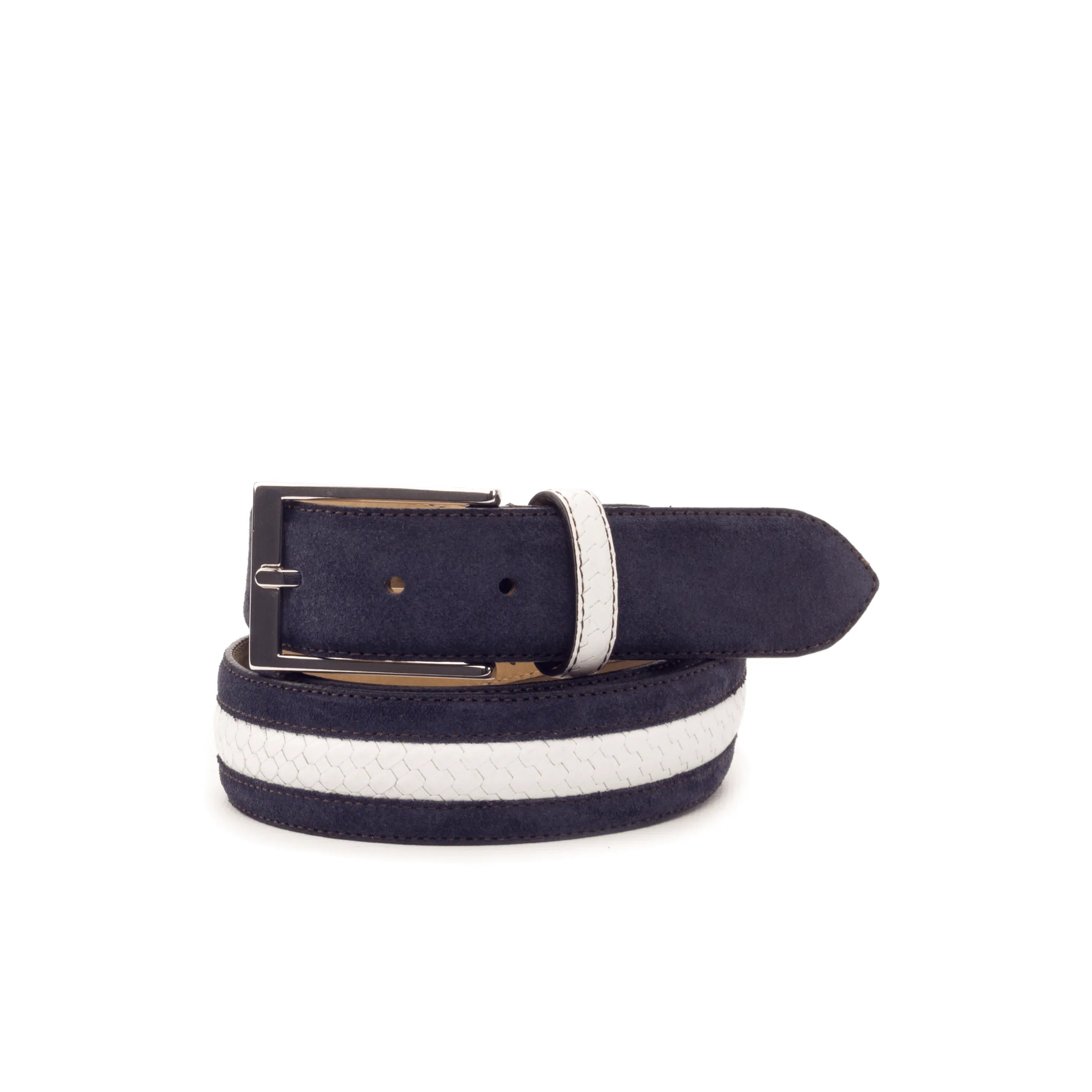
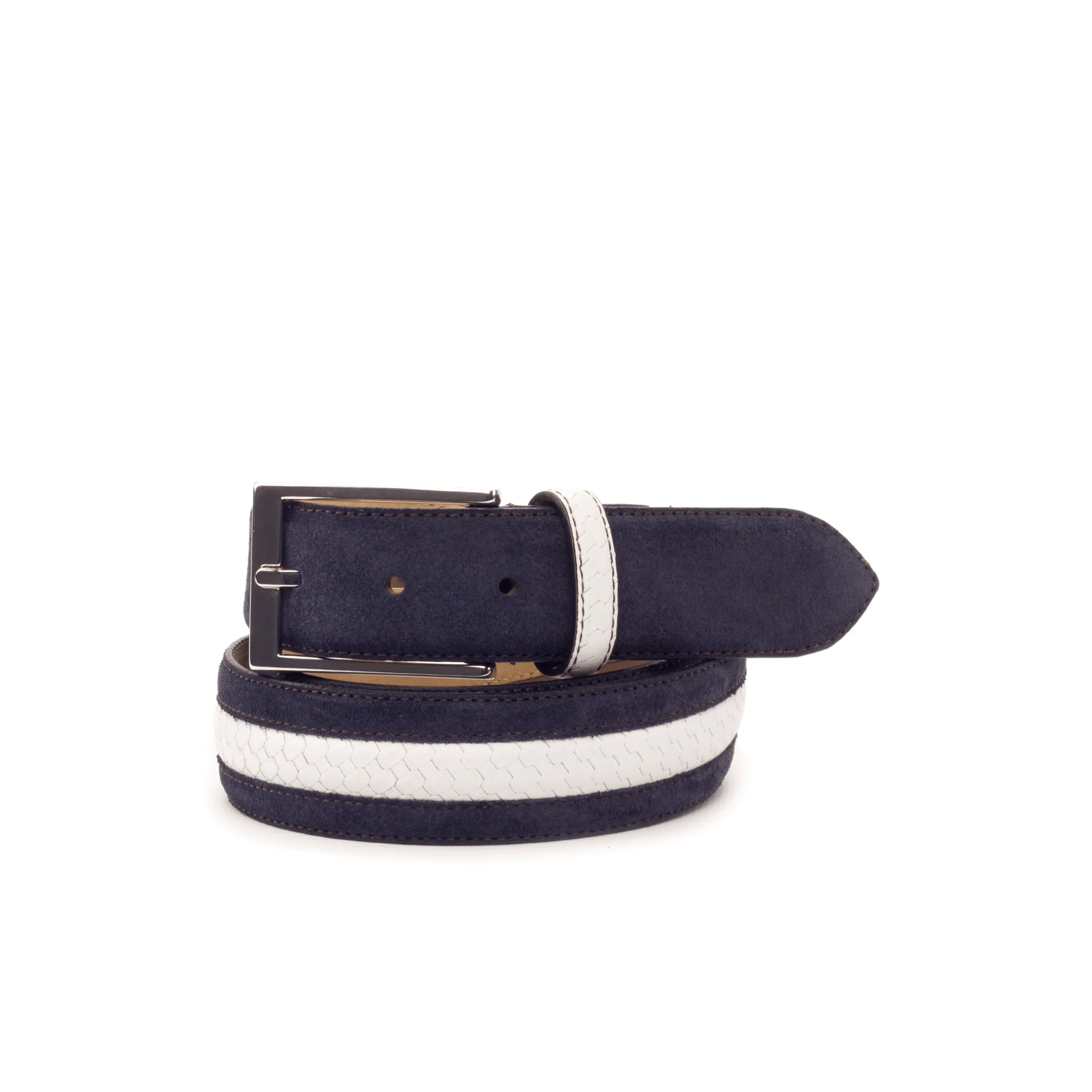
The smartest entry point, though, is smaller still — an accessory. This is where tartan earns its keep without demanding you rebuild your wardrobe. A patterned belt sits at the natural break of an outfit, drawing the eye to the waist and adding a note of colour and history where a plain strap would simply hold your trousers up. It's the difference between owning a check and merely referencing one.
Que Shebley's Venice belts lean into exactly this idea, translating woven-textile patterns into hand-finished Italian leather. The Sahnish Venice Belt renders a full tartan sett in leather, which is a genuinely clever move — you get the visual richness of the cloth with the durability and structure of a belt.
If full tartan feels like too much of a statement for your wardrobe, the family of plaids and checks offers gentler dialects. A softer, tonal plaid like the Romeo Venice Belt reads as texture more than declaration — the kind of thing that rewards a second look rather than announcing itself across the room. It's tartan's diplomatic cousin.
And for those who want pattern without the specific national freight of tartan, houndstooth is the reliable middle path — geometric, timeless, and a little more Milanese than Highland. The Julio Venice Belt does the job, offering the visual interest of a check with none of the clan politics.
A few working rules
- One pattern, one place. If your belt or scarf carries the check, keep the rest of the outfit solid. Let the tartan be the loudest thing in the room, and only just.
- Mind the scale. A large, high-contrast sett is spectacle; a small, tonal one is texture. Choose based on how much attention you actually want.
- Respect the colour temperature. Cool tartans — navy, green, grey — behave with tailoring. Warm reds and ambers lean festive and want to be handled carefully outside of December.
- Let leather do the diplomacy. A patterned belt gives you the reference without the commitment of a full jacket. It's the lowest-risk way to wear the highest-drama pattern.
Tartan has survived a ban, a monarchy's embrace, a punk's scissors, and a fashion house's over-exposure — and it's still here, still charged, still capable of saying something. That's the whole appeal. When you wear it, even in the small dose of a belt at your waist, you're wearing an argument that's been running for two centuries. The trick is simply to make sure you're the one holding the last word.

اترك تعليقًا
This site is protected by hCaptcha and the hCaptcha Privacy Policy and Terms of Service apply.