The Gunboat: How America's Biggest, Boldest Shoe Earned Its Swagger
There is a certain kind of man who looks at a plain black oxford and feels nothing. He wants heft. He wants stitching that runs the length of the shoe like the seam of a football. He wants, in a word, a gunboat — the affectionate, faintly ridiculous nickname American shoemakers gave the longwing blucher, a shoe so substantial it seems less designed than commissioned.
The longwing is the most American object in a wardrobe otherwise borrowed wholesale from England and Italy. The English gave us the oxford and the country brogue; the Italians gave us the featherweight loafer and the art of the unlined moccasin. But the longwing — big, broguing everywhere, a wingtip whose "wings" sweep all the way around the heel in a single unbroken line — is a product of Midwestern confidence. It belongs to Chicago winters, to boardrooms in Milwaukee and Minneapolis, to men who wanted a shoe that could survive slush, salt, and a forty-year career.
Where the wing comes from
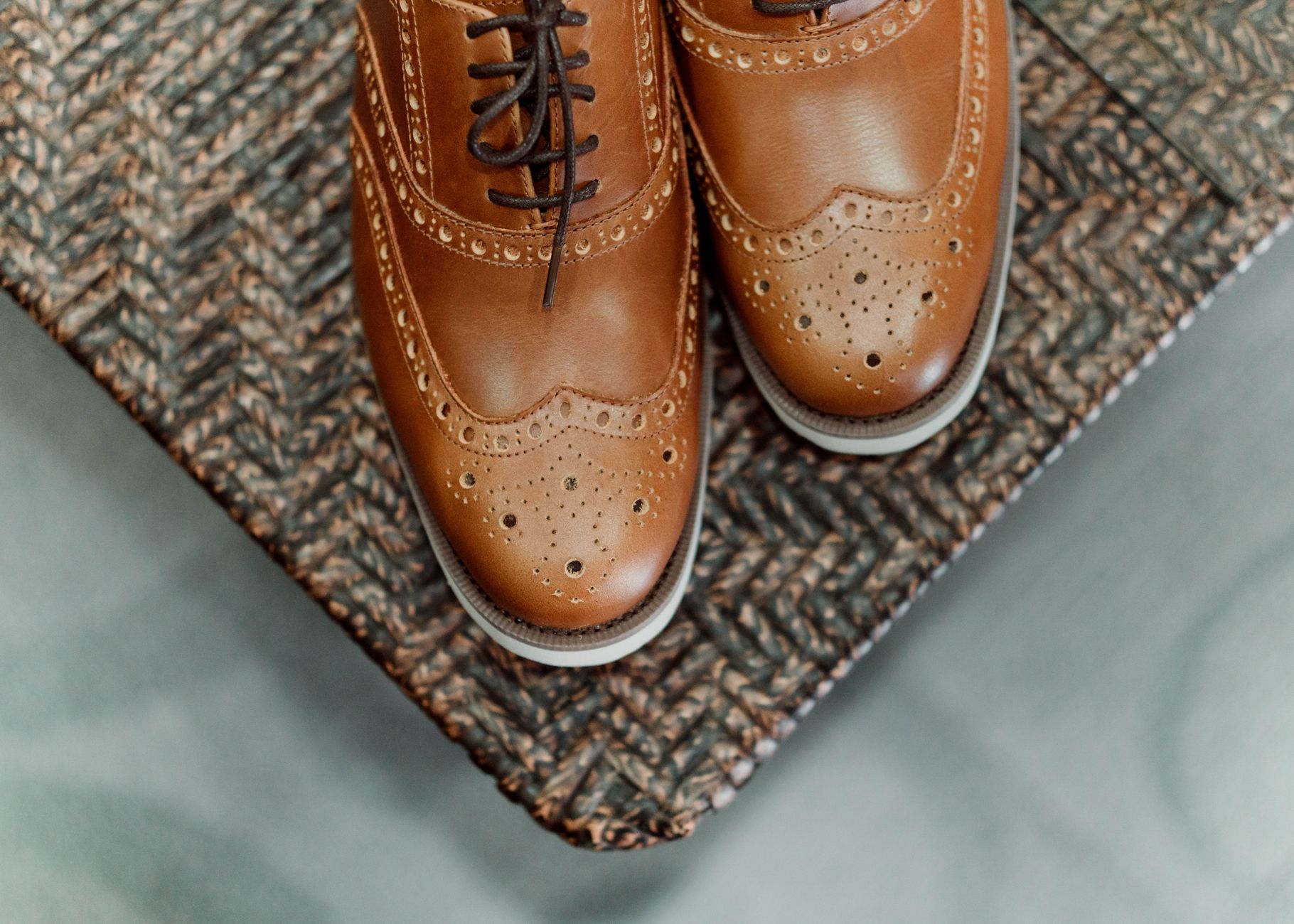
Start with the vocabulary, because it explains the shape. A brogue refers to the decorative perforations — originally functional holes that let water drain out of shoes worn across the boggy fields of Ireland and Scotland. A wingtip is the pointed, wing-shaped toe cap those perforations decorate. On a standard wingtip, the toe cap dips to a point at the center and its wings curve back only a short way along each side.
The longwing takes that wing and refuses to let it stop. The stitching continues past the sides and meets in a single seam at the back of the heel, so the whole upper is effectively wrapped in one continuous decorative line. Pair that with a blucher (or derby) lacing — where the eyelet flaps are stitched on top of the vamp, open at the throat — and you get the classic American profile: roomy, forgiving, easy to pull on, built like it means it.

The banker's boot that wasn't a boot
Through the mid-twentieth century, the longwing was the unofficial uniform of the American professional class between the coasts. It arrived most often on a wide, sturdy last with a chunky sole and, frequently, in a deep oxblood or "color 8" burgundy shell cordovan that only deepened with the decades. It was worn by lawyers, insurance men, engineers — the sort who bought one good pair, resoled them for thirty years, and passed them down.
That association is exactly why the shoe fell out of fashion in the 1980s and '90s. It read as stodgy, corporate, the footwear of a man who had stopped trying. Slimmer Italian silhouettes made the gunboat look like a relic. For a while, it more or less was.
Then something predictable happened: the pendulum swung. In the late 2000s, as a younger generation rediscovered heritage American clothing — raw denim, waxed jackets, workwear reissues — the longwing came back with a vengeance, championed by menswear blogs and Japanese buyers who understood, better than most Americans did, that this was a genuine national classic. The gunboat became cool precisely because it had never tried to be.
Why the shape flatters the modern man
Here is the counterintuitive part. A big shoe is often more flattering than a delicate one, especially with the fuller trousers coming back into rotation. A wisp of a slipper looks marooned at the bottom of a pleated flannel; a longwing anchors it. The continuous seam draws a long, uninterrupted line down the foot, which visually lengthens rather than chops. And the broguing — busy as it is — actually softens a formal outfit, injecting a note of texture and mischief into an otherwise sober suit.
The trick with a longwing is to let the shoe be the loudest thing in the room and keep everything above it quiet. Charcoal flannel, mid-grey worsted, a navy suit with a slight break in the trouser — these are the longwing's natural habitat. Tonal is your friend. A brown longwing with plaid or tweed detailing, for instance, wants a solid, muted suit that lets the pattern do the talking.

That blackwatch-and-brown-leather pairing above is a good illustration of the modern gunboat's dual personality: unmistakably a serious dress shoe in its architecture, yet playful enough — thanks to the tartan panel and the riot of perforations — to wear with an odd jacket and grey trousers on a Saturday. It is the rare shoe that works in a boardroom and a country pub without changing costume.
A note on leather, and why patina matters here
The longwing rewards good leather more than almost any other style, because there is simply so much of it on display. Every square inch of that continuous wing catches light. On cheap corrected-grain leather, a longwing looks like a plastic toy; on properly finished skins, it looks like sculpture.
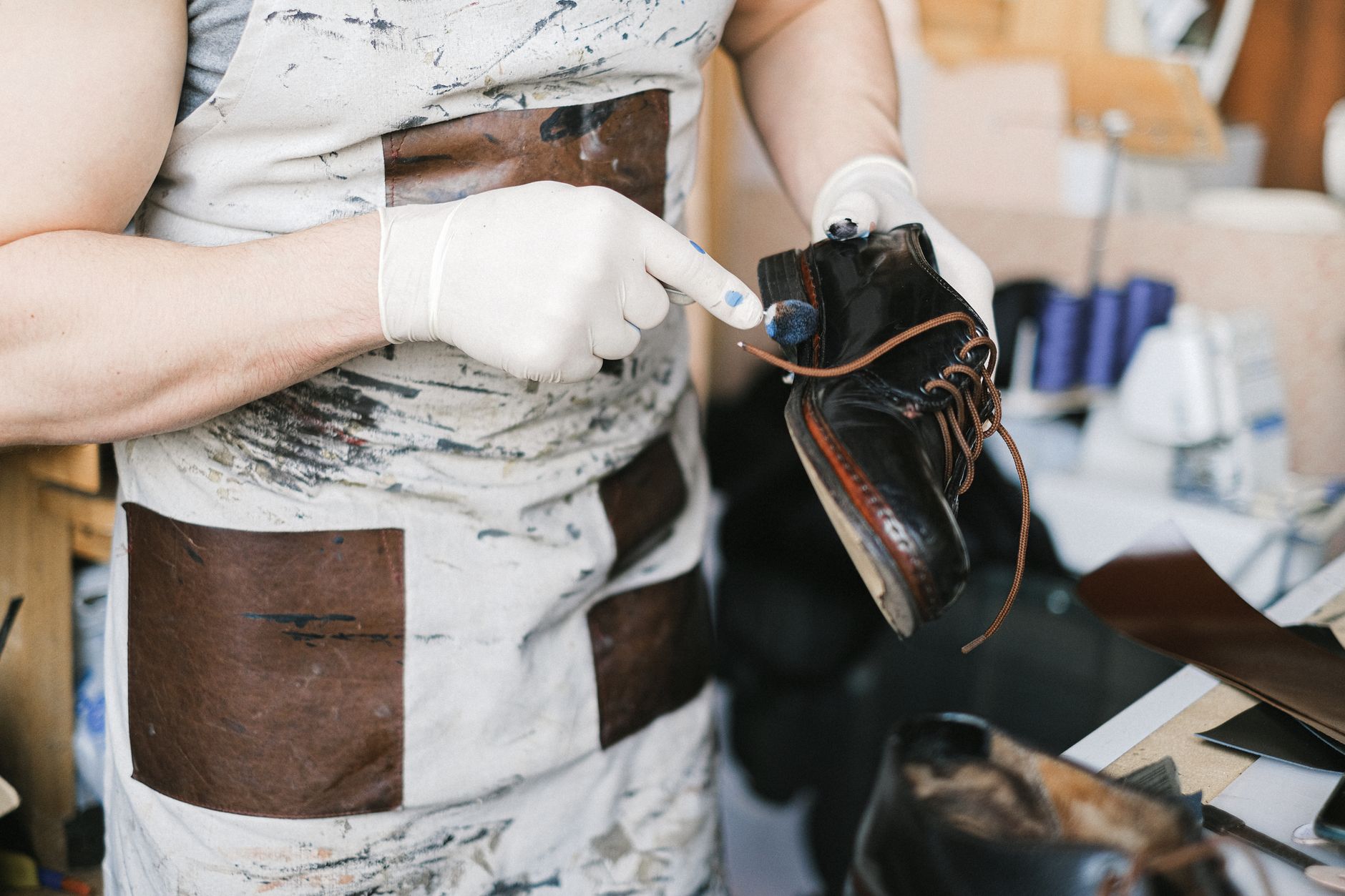
This is where hand-finishing earns its keep. Houses that work in Italian crust leather — an undyed, largely untreated hide that arrives at the workshop as a blank canvas — can build color into the shoe by hand, layer by layer, so the finished patina has depth rather than a flat factory coating. Que Shebley, which handcrafts its shoes to order in exactly this kind of crust leather, leans into that: a two-tone longwing, darker at the toe and heel and lighter across the vamp, is essentially impossible to fake with off-the-shelf dyed leather. It has to be shaded by hand.

The two-tone version above shows what that hand-shading buys you: highlights and shadows that shift as you walk. It is the same instinct that drove those old bankers to buy shell cordovan and let it ripen for decades — the understanding that the best longwings aren't finished when you buy them. They finish over years.
How to wear the gunboat now
- With a suit: Stick to grey and navy worsteds or flannels. Let the shoe be the one flourish and keep the rest disciplined.
- With tailored separates: A tweed or corduroy jacket, flannel trousers, and a brown longwing is close to the platonic ideal of autumn dressing.
- With denim: Dark, straight-leg jeans and a longwing under a topcoat is the heritage-American look that started the revival. It still works.
- Avoid: Skinny trousers with a short break. The gunboat needs room above it; strand it under drainpipes and it looks like a diver's boot.
The longwing is a shoe that survived being unfashionable, which is the truest test of a classic. It was never subtle, never quiet, never trying to charm you. It simply outlasted every trend that mocked it — and then, as good things do, it came back looking better than ever. Buy one good pair. Feed the leather. Resole it. In twenty years it will be the most interesting thing you own.

اترك تعليقًا
This site is protected by hCaptcha and the hCaptcha Privacy Policy and Terms of Service apply.