مقال: Blood and Wine: The Long Seduction of Oxblood

Blood and Wine: The Long Seduction of Oxblood

There is a moment, usually in a dim restaurant or the gold light of late afternoon, when a brown shoe stops being brown. It flushes. It warms into something closer to spilled claret or the inside of a pomegranate, and you realize the man wearing it chose that color on purpose. That shade has many names — oxblood, burgundy, claret, merlot, cordovan, what the French call bordeaux — but they all point to the same thing: a red that has grown up, a brown that has had a drink.
Oxblood is the most underrated color in a man's wardrobe, and the most quietly ambitious. It carries the authority of black and the ease of brown while committing fully to neither. Worn well, it reads as confidence. Worn badly, it reads as a man trying very hard, which is why most men retreat to safer ground and leave the color to the brave. Their loss.
A Color With a Criminal and a Royal Record
The name itself is grisly and honest. Historically, oxblood was exactly that — a pigment and sealant made with animal blood, used on everything from Chinese lacquer to the polished red floors of old Moroccan and Portuguese homes. The color meant permanence, wealth, a surface that aged into depth rather than decay. It has always been a color about time.
In menswear, oxblood has lived two very different lives. There is the patrician version: the cordovan wholecut glowing under a banker's trouser break, the burgundy tassel loafer that signaled East Coast money long before anyone used the word "preppy." And there is the insurgent version. In 1960s and '70s Britain, the cherry-red Dr. Martens 1460 became the uniform boot of skinheads, mods, and later punks — a working-class red that announced itself on a council estate as loudly as cordovan did in a boardroom. Same family of color, opposite social codes. Few shades can claim to have soundtracked both a Wall Street lunch and a Clash gig.
That double life is precisely what makes oxblood interesting. It is a color with range — menacing in one context, aristocratic in another — and a man who understands that range can use it to say something more precise than brown or black ever could.
Why It Beats Black and Brown at Their Own Game
Black is formal but flat; under artificial light it can look like a void, a hole where a shoe should be. Brown is friendly but, in its medium register, a little predictable — the default of men who have simply run out of opinions. Oxblood solves both problems. It has the saturation to hold its own with a charcoal suit, and the warmth to flatter denim or flannel. It photographs beautifully, which, in an age when every outfit is quietly auditioning for a camera, is not a trivial advantage.
It is also sneakily versatile across the week:
- With navy or grey tailoring, oxblood is the move of a man who finds black too severe and brown too casual — the diplomat's compromise, but with a pulse.
- With raw denim and a knit, a burgundy boot looks lived-in and intentional at once, the sartorial equivalent of a good leather jacket.
- With greys, camels, and olive, it becomes the anchor color — the one deep note that makes everything above it look considered.
The one place oxblood struggles is next to true browns in adjacent tones; a tan belt fighting a burgundy shoe is a small civil war no one wins. The fix is simple. Let the shoe lead and let leathers around it either match or clearly contrast.

The Leather Makes the Color
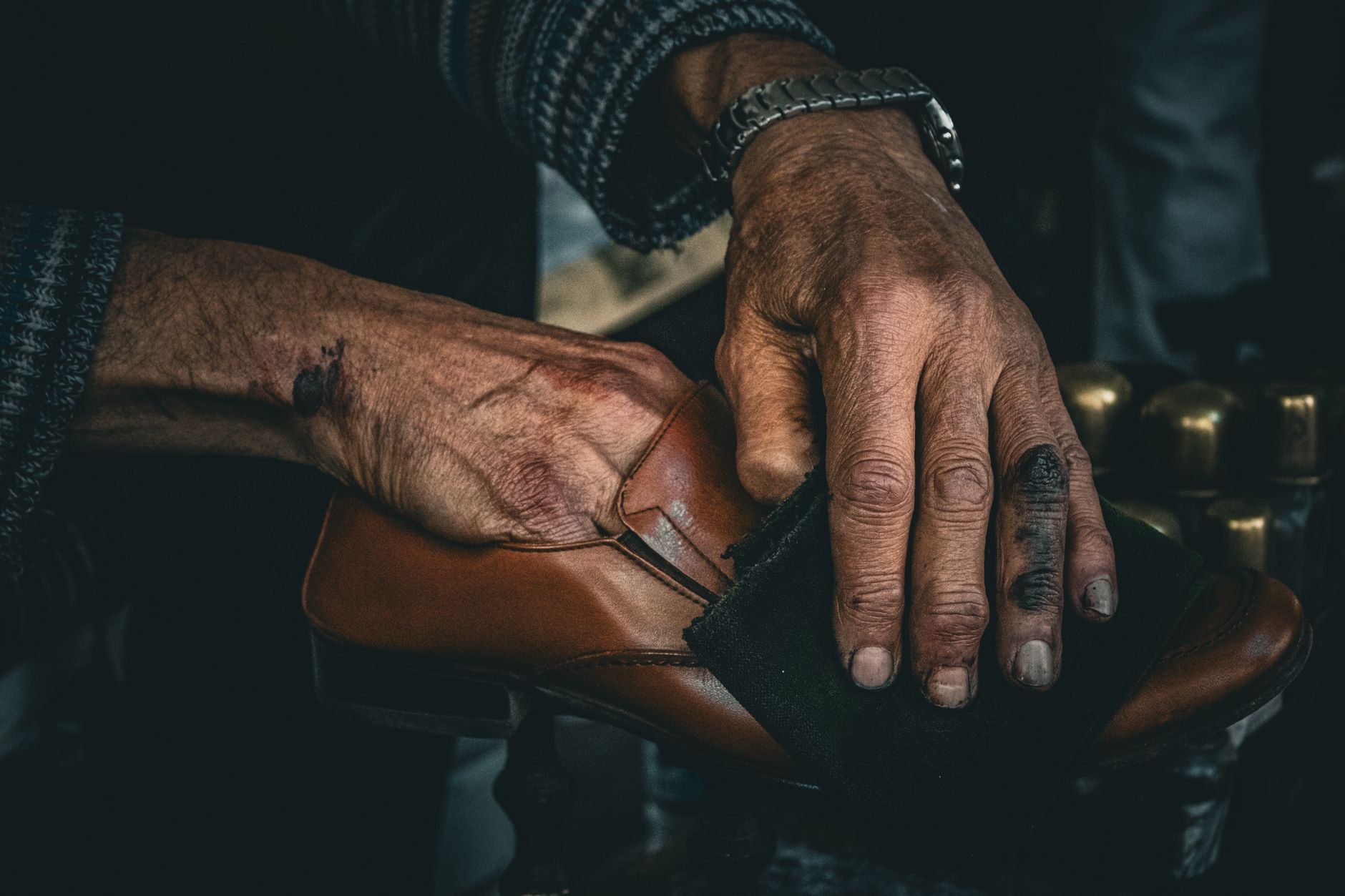
Here is the part most men miss: oxblood is not really a color you buy, it's a color you grow. The flat, uniform burgundy of a mass-produced shoe is a one-note affair that looks the same on day one as on day five hundred. The oxblood worth owning has depth — darker at the welt and toe, lighter across the vamp, with the faint translucency that only comes from dye worked into the leather by hand rather than sprayed over it.
This is why the shade lives most convincingly on crust leather, the untreated hides that arrive at the workshop as a blank canvas and are colored and finished by hand after the shoe is built. A good patina artist can take that neutral crust and layer it into a burgundy that shifts from near-black in the creases to warm wine on the high points — the kind of finish houses like Berluti built a mythology on, and the logic behind made-to-order outfits like Que Shebley, whose "Design Your Own" program lets a client specify exactly how deep or how bright that red should run.
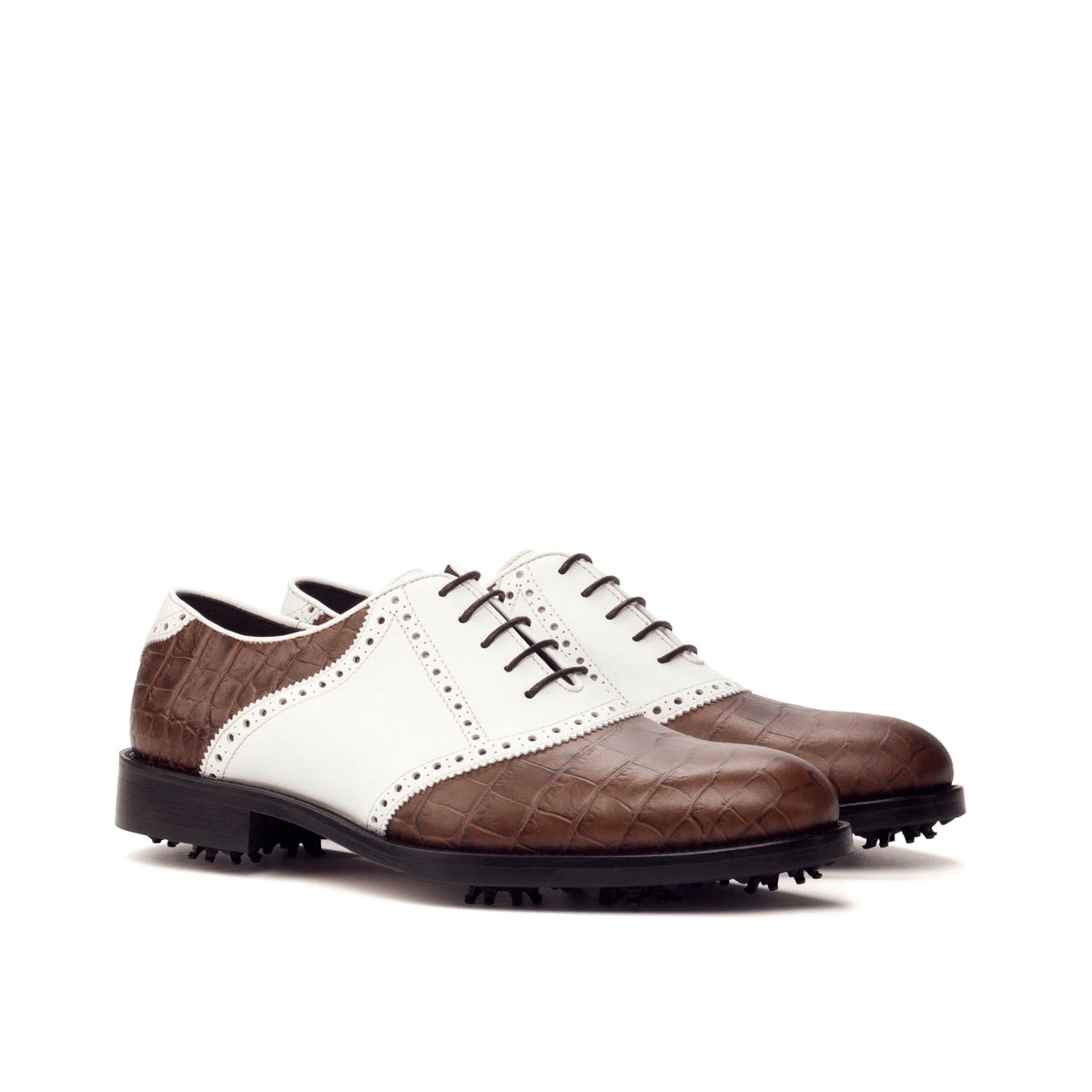
Exotic skins take the color even further, because their natural texture catches and scatters light. A burgundy alligator reads differently across every tile and scale, which is a great deal of drama for a shoe you'll actually wear with a suit.
How to Wear It Without Looking Like You Tried
The trap with any statement color is overplaying it. Oxblood works best as the single boldest thing in the outfit, not one of several. Pair a burgundy shoe with sober clothes — grey flannel, navy worsted, a white or pale-blue shirt — and let the color do the quiet work of lifting the whole. Keep socks dark and low-contrast so the eye travels to the leather, not away from it.
If you want to echo the color, do it with restraint and a single partner: a burgundy knit tie, a pocket square with a thread of claret, a watch strap in the same family. Resist matching your belt to the shoe exactly unless both are genuinely the same tone; near-misses look worse than deliberate contrast. And for anything black-tie-adjacent, a dark, almost-black oxblood whole-cut or loafer is one of the most elegant liberties a man can take when he's bored of patent — understated to everyone except the one or two people in the room who truly notice shoes. Those are the people worth dressing for.
Brown is safe. Black is expected. Oxblood is the color of a man who has decided, somewhere along the way, that he'd rather be remembered than merely approved of. It's blood and wine — a little dangerous, a little decadent, and all the better for it.

اترك تعليقًا
This site is protected by hCaptcha and the hCaptcha Privacy Policy and Terms of Service apply.